Camping Light Psychology: Design Better Group Nights
By Amara Patel • 23rd Feb
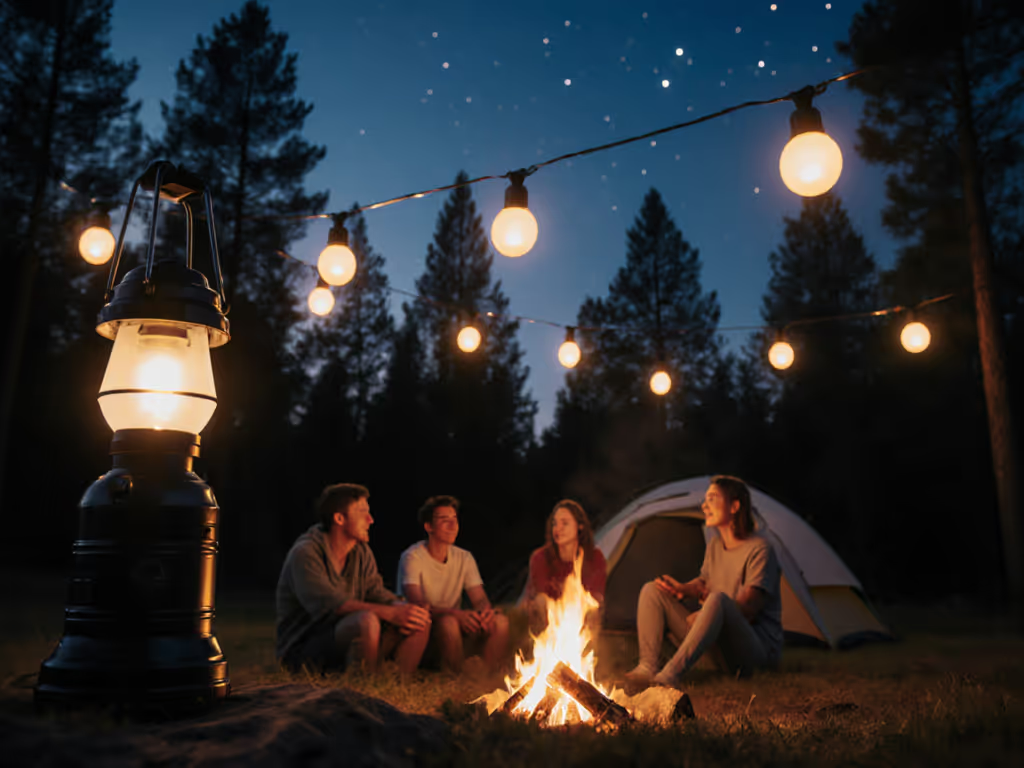
When a group gathers around a campfire or huddles under a tent lantern, light isn't just illumination, it shapes conversation, sleep quality, and group cohesion. Camping light psychology combines neuroscience, group dynamics, and practical engineering to answer a question most campers never ask: What color and intensity of light actually keeps a group calm, alert, and connected? The answer changes everything about how you pack.
1. Know Why Cool White Light Sabotages Group Calm
One of the most overlooked mistakes in camp lighting is defaulting to cool white (4000K and above). Cool white light triggers elevated cortisol levels within 20 minutes of exposure[5], the same stress hormone that keeps you wired and alert. When a group is already managing the minor tensions of shared tents, shared cooking duties, and close quarters, adding a 5000K lantern in the evening is like adding an invisible accelerant to social friction.
Warm light (2700K-3000K) and deeper amber (1500K-2200K) do the opposite: they prime the nervous system for calm and prepare the body for sleep. This isn't psychology alone. It is also circadian biology. Exposure to natural light during camping trips resets internal circadian rhythms[6], which already supports better sleep. Adding cool-white glare in the evening undoes that benefit and keeps group members unnecessarily wired when they should be winding down. For a deeper dive into how color temperature shapes mood and night vision, read our warm vs cool white guide.
Action: Audit every light in your camp kit. If it defaults to 5000K or higher, it's working against your group's evening mood. Choose 2700K as your baseline for social hours; reserve warmer (1500K-2200K) tints for post-dinner wind-down and sleep-mode use.
2. Understand How Light Shapes Psychological Safety and Group Cohesion
Group dynamics research identifies psychological safety (the belief that it's safe to take interpersonal risks without fear of embarrassment or punishment) as the single strongest predictor of team effectiveness[2]. Light plays a subtle but powerful role.
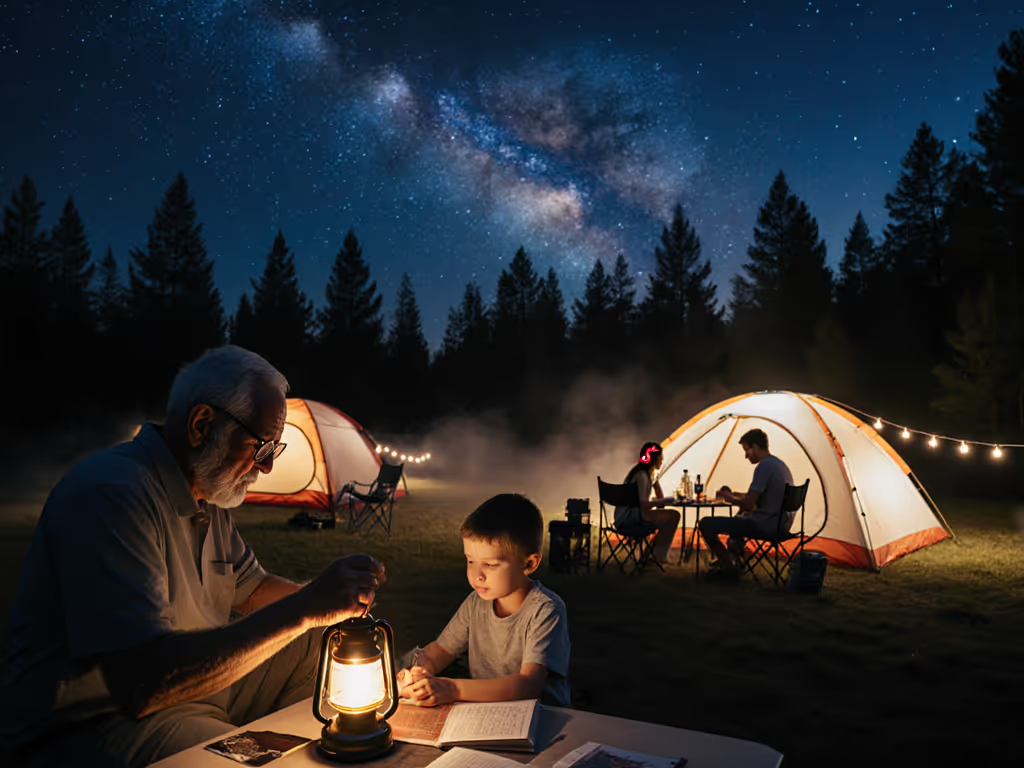
Harsh, directional light creates visual hierarchy: whoever is in the bright zone feels exposed; whoever sits outside feels excluded. Diffuse, even light allows all members to feel equally visible and valued. Similarly, cohesion in groups is powerful: people feel more connected, work harder, and enjoy membership more, but extreme cohesion can breed groupthink, where conformity pressures override critical thinking[1].
A well-designed lighting kit avoids both extremes. Warm, diffused ambient light creates the conditions for safe conversation without creating pressure cookers of conformity. Task lighting (headlamps, reading lights) is reserved for individual work, so no one is perpetually under the spotlight. For placement strategies and light layering that foster connection without glare, see our camp lighting design guide.
Action: Design your kit around diffused ambient light first (a lantern with a frosted diffuser, never bare LED). Add task lights only when needed, and keep them pointed at objects, not faces.
3. Apply Group Polarization Science to Prevent "Us vs. Them" Camp Divisions
Group polarization (the tendency for group members to adopt more extreme versions of their pre-existing views) accelerates in homogenous groups[2]. At camp, this can manifest as cliques, late-night clusters around the brightest light, or exclusion of quieter members.
Intergroup hostility forms quickly under competitive or resource-scarce conditions but dissolves when groups face shared challenges requiring joint effort[2]. Lighting design can either reinforce or reduce this dynamic. Unequal light distribution (one group gets the bright lantern; others sit in relative darkness) creates perceived resource scarcity and resentment. Intentional, inclusive light design (where all camp zones receive appropriate, equal attention) signals that the group is unified around shared comfort, not fragmented into haves and have-nots.
Action: Map your campsite layout and ensure every social zone (cook area, seating circle, path to facilities) receives adequate, warm light. Avoid creating dark "outsider" zones. This small choice dramatically reduces the invisible friction that emerges over multi-day trips.
4. Plan Power Around Realistic Group Runtimes, Not Manufacturer Specs
Battery anxiety is one of the fastest ways to fracture group trust. When lights fail mid-evening or someone runs out of headlamp juice on a night hike, resentment follows. Manufacturer specs ("Up to 100 hours runtime") are tested at the lowest output and rarely match real-world group use, where people run lights at usable brightness levels.
Instead of guessing, build a simple power checklist: list every light, its actual runtime at your chosen brightness (not maximum), the number of nights, and your per-night mAh draw. Add 20-30% reserve for margin. If you're choosing a standard battery strategy, compare rechargeable vs disposable batteries to reduce cost and runtime anxiety.
Example loadout: A group of four for three nights might carry:
- Four headlamps (8-10 hours each at comfortable brightness = 32-40 headlamp-hours total)
- One 10,000 mAh power bank (covers recharging one 21700 cell midtrip and phone emergencies)
- One 30-50 lumen lantern with warm, high-CRI output (4-6 hours per night = 12-18 lumen-hours)
This level of detail prevents the scenario where one person's depleted batteries create anxiety for the whole group.
Action: Before any trip, fill out a one-page power plan: list lights, actual runtimes at chosen modes, total capacity needed, and your charging/reserve strategy. Laminate it and keep it in your kit.
5. Choose High CRI for Cooking, First Aid, and Social Warmth
CRI (Color Rendering Index) measures how accurately a light shows true color. Get the full breakdown in our camping light CRI guide. A CRI of 90+ is the practical floor for camp cooking and first aid; anything below 85 makes food look less appetizing, turns first-aid supplies into color-guessing games, and makes reading faces during conversation harder.
High-CRI warm light (2700K, 90+ CRI) is the bridge between ambiance and function: it looks beautiful, supports genuine social connection, and doesn't compromise safety or task competence. Low-CRI cool light might be brighter, but it's colder, less flattering, and ultimately lonelier.
Action: When selecting a lantern or headlamp, verify both CCT (2700K or warmer) and CRI (90+). This is non-negotiable for multi-night trips where you're cooking, navigating, and managing group needs beyond just "seeing."
6. Manage Light Spill and Respect Neighbor Sleep (Neighbors Sleep First)
One of the most overlooked courtesies in group camping is light pollution directed at adjacent campsites. Cool, bright light spilling into neighbors' tents kills their sleep and creates lasting resentment, especially in established campgrounds. Learn how to minimize spill while protecting wildlife and sleep in our dark-sky camping primer.
Directional control (using baffles, shields, or diffusers that contain light) is the secret. Shielded ambient light stays on your site. Headlamps with a red-light mode preserve night vision and don't disturb sleepers on your own trip or nearby. Task lights are pointed downward or into your own work area, not outward.
This discipline also reinforces a key principle: fewer, better pieces that do their job quietly. A single well-shielded lantern beats three unshielded lights competing for attention and spilling everywhere.
Action: Before finalizing a kit, test light spill in darkness. Set up your lights on a table and walk a circle around them. Any light visible more than 10 feet away needs shielding or diffusion. Add foam diffusers or DIY baffles (aluminum foil, cardboard) as needed.
7. Create a Simple Pre-Trip Ritual: Charge, Label, Verify
The most reliable groups run the tightest pre-trip checklists. Seven days before departure, conduct a thirty-minute light audit: charge every battery fully, label each cell with a permanent marker (date and mAh capacity), verify that all chargers and cables are present, and test every light at the modes you'll actually use.
This ritual surfaces problems (a dead 18650 cell, a loose headlamp clip, a missing diffuser) before they become on-trip surprises. It also creates a shared mental model: everyone knows the kit, where spare batteries are, and how to swap a dead cell.
Standardizing on rechargeable 18650 or 21700 cells and USB-C charging across all devices cuts this overhead significantly. Proprietary batteries and mixed charging standards add weight, complexity, and failure points.
Action: Create a printed checklist that lives in your kit bag. Use it one week before every trip. Note the condition of each cell and light. Replace worn items before departure, not during.
Actionable Next Step
Start small: choose one light (either your group's primary lantern or your personal headlamp) and upgrade to 2700K, high-CRI output with a warm-tone diffuser. Run one trip with that single change and notice the difference in conversation flow, sleep quality, and ease of evening tasks. Once you feel the benefit of intentional light design, scale the principle across your full kit.
Lighting is the invisible grammar of group dynamics. Spend less on gadgets, waste less on redundant specs, and light with intention and care. Your group will feel it the first night.
Related Articles