Mountain Expedition Lighting: Cold-Proof Altitude Beams
By Naoko Sato • 10th Jan
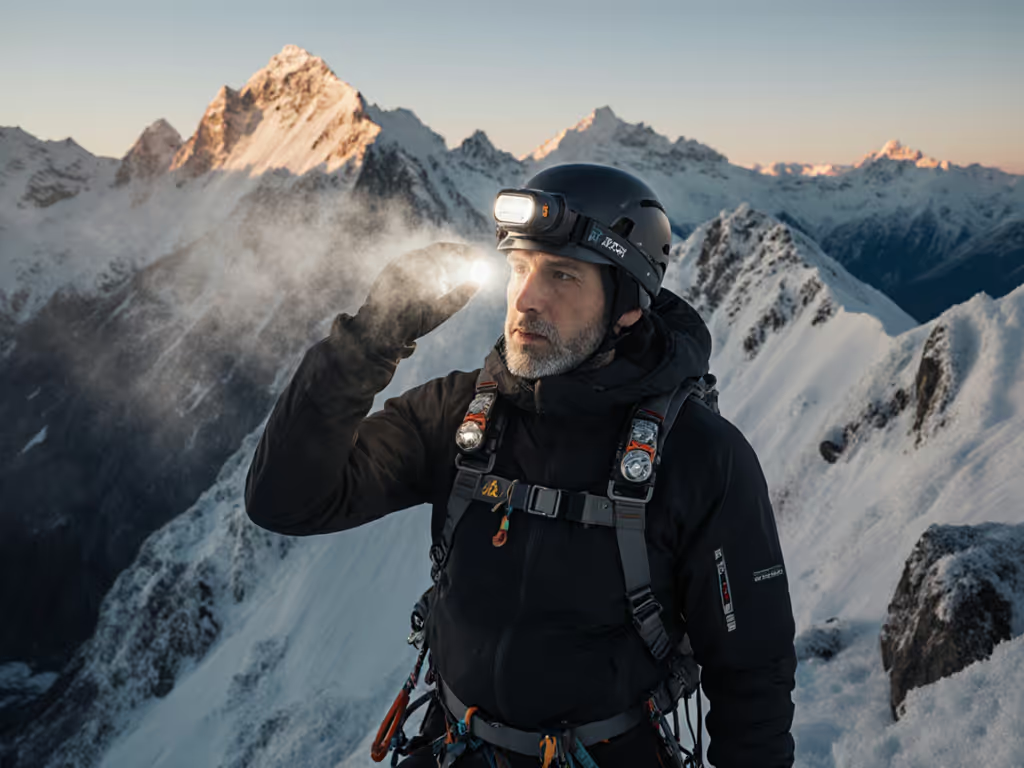
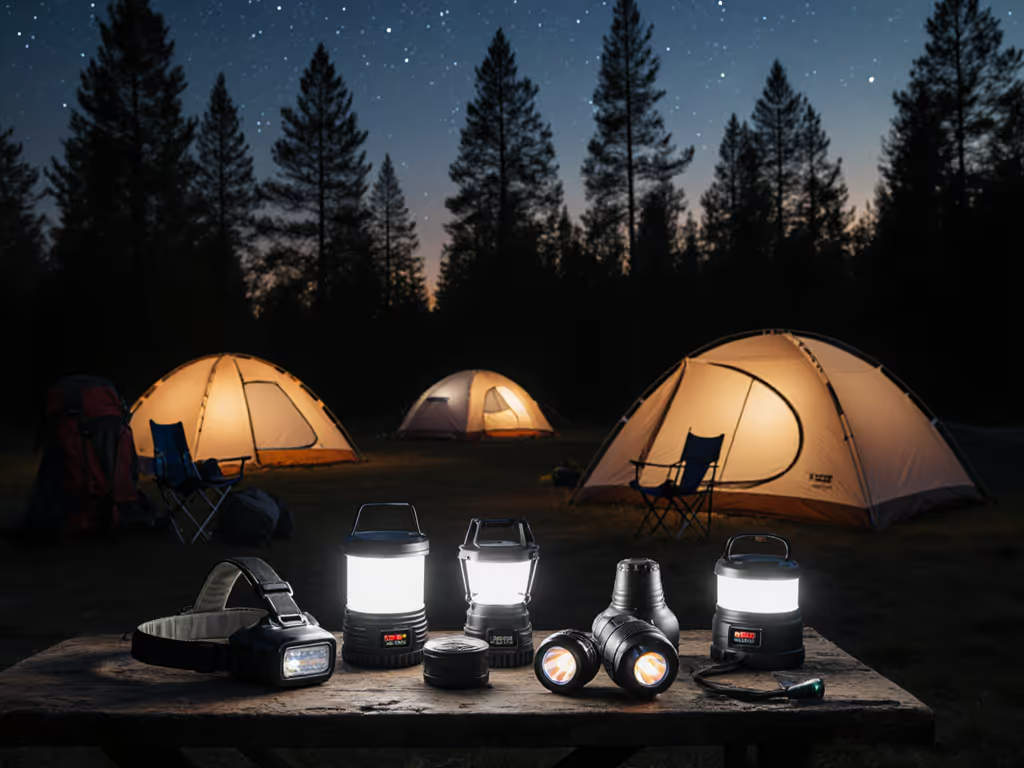
When planning for high-altitude adventures, thoughtful mountain expedition lighting makes the difference between a peaceful camp and a disrupted night. As someone who has spent years studying how light interacts with human physiology and natural environments, I understand that proper tent camping lights aren't just about illumination, they're about respecting both people and place. High above treeline, where temperatures plummet and the air thins, your lighting choices affect more than just visibility; they impact sleep quality, safety, and even the delicate ecosystem around your campsite. In this FAQ deep dive, I'll translate complex lighting science into practical solutions for your next summit attempt or high-country expedition.
Gentle light makes every voice easier to hear.
Why does altitude affect my lighting performance?
At higher elevations, the physics of light changes in subtle but significant ways. "Thin air illumination" presents unique challenges because lower atmospheric density affects both how light travels and how our eyes perceive it. The reduced particulate matter in mountain air means light beams travel farther with less diffusion, creating harsher shadows and more intense glare. This is why many climbers report that their standard headlamps seem "too bright" at altitude, even when used at lower settings.
Additionally, the increased UV radiation at elevation degrades plastic components faster. Expedition-tested lights designed for "summit night lighting" typically feature UV-stabilized polycarbonate housings that won't become brittle during multi-week trips. The dry mountain air also creates static electricity issues that can interfere with electronic components, something most manufacturers don't test for in standard conditions.
How does cold temperature impact my lighting kit?
This is perhaps the most critical yet overlooked aspect of high-altitude lighting. Lithium-ion batteries (which power nearly all modern expedition lights) experience significant performance degradation below 32°F (0°C). At -4°F (-20°C), you might get only 50% of the rated runtime due to slowed chemical reactions within the cells. This "cold weather penalty" affects both headlamps and lanterns equally. For gear that excels in sub-freezing conditions, see our trusted winter tent lights and cold-weather battery guide.
The solution isn't just bringing extra batteries (though that helps). Strategic placement matters: keeping spare batteries in an inner pocket against your body maintains their temperature better than storing them in an external pack pocket. Some expeditioners use hand warmer packs wrapped in cloth around battery compartments for extended summit pushes. For true "cold-proof altitude beams," look for lights with battery compartments that can be positioned close to your body via cable mounting rather than fixed to the light head.
What color temperature works best for mountain expeditions?
Many climbers default to cool white light assuming it's "brighter," but this creates several problems at altitude. Cool white light (above 4000K) contains more blue spectrum that disrupts melatonin production (dangerous when you need quality rest before a summit push). It also scatters more in the dry mountain air, creating glare that actually reduces visibility in dusty or snowy conditions.
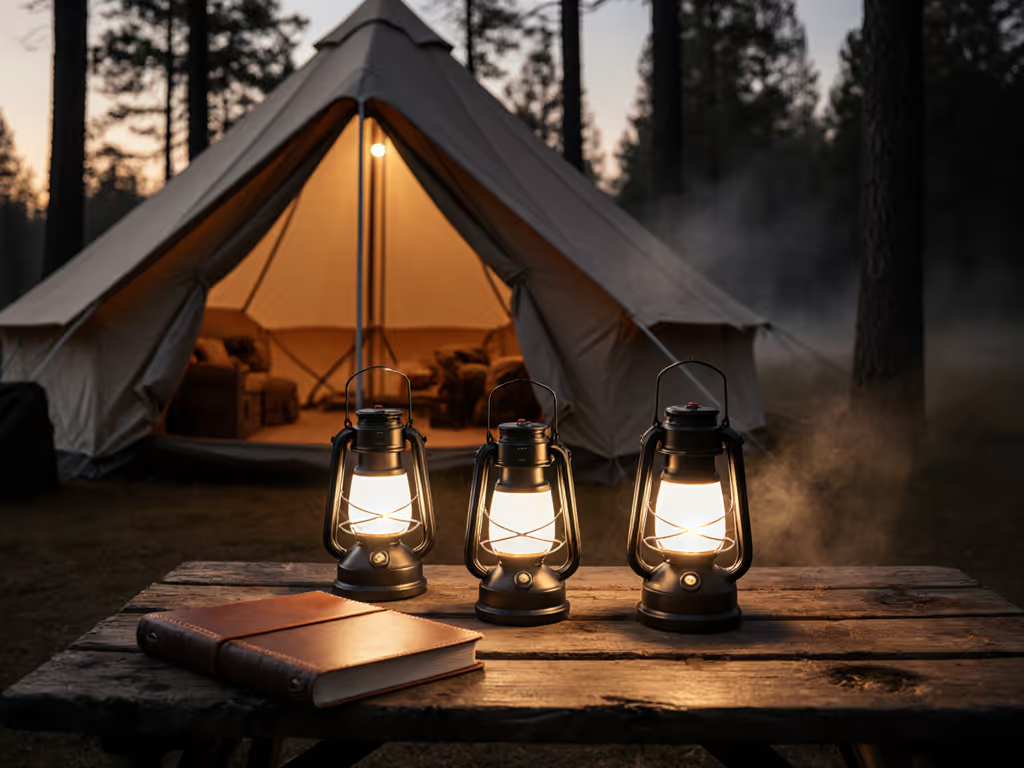
Research shows that warmer color temperatures (2700K-3000K) provide better visual acuity for trail navigation at night. This is why I prefer lights in this range for campsite illumination, as they create less visual fatigue during extended use. When I first learned this lesson during a family camping trip, I swapped our harsh cool lights for warmer options, and suddenly bedtime routines became peaceful, conversations lingered longer, and we could actually see the Milky Way again. That experience solidified my core understanding: light should serve people and place, never dominate them.
How can I design an effective lighting system for group expeditions?
Expedition lighting isn't just about individual performance, it's about consideration for your team. When multiple people share a confined space like a high-altitude camp, lighting etiquette becomes critical. Here's how to create a harmonious system:
- Task layering: Designate different light zones with appropriate intensities (cooking area: 300-500 lumens, 2700K; sleeping area: ≤50 lumens, 1800K red)
- Mounting flexibility: Use lights that can be helmet-mounted, tent-pegged, or hung from carabiners for adaptable coverage
- Consistent interfaces: Standardize on lights with similar control patterns to avoid confusion during critical night movements
- Color coordination: Ensure all group members use similar color temperatures to prevent disruptive shifts when multiple lights are active
Remember, light is hospitality. When your lighting choices consider others' night vision and rest needs, you're not just providing illumination, you're creating a welcoming environment where everyone can recover properly. For expedition planning, build a layered emergency lighting system so backups are ready when primary lights fail.
What's the ideal lighting setup for summit night attempts?
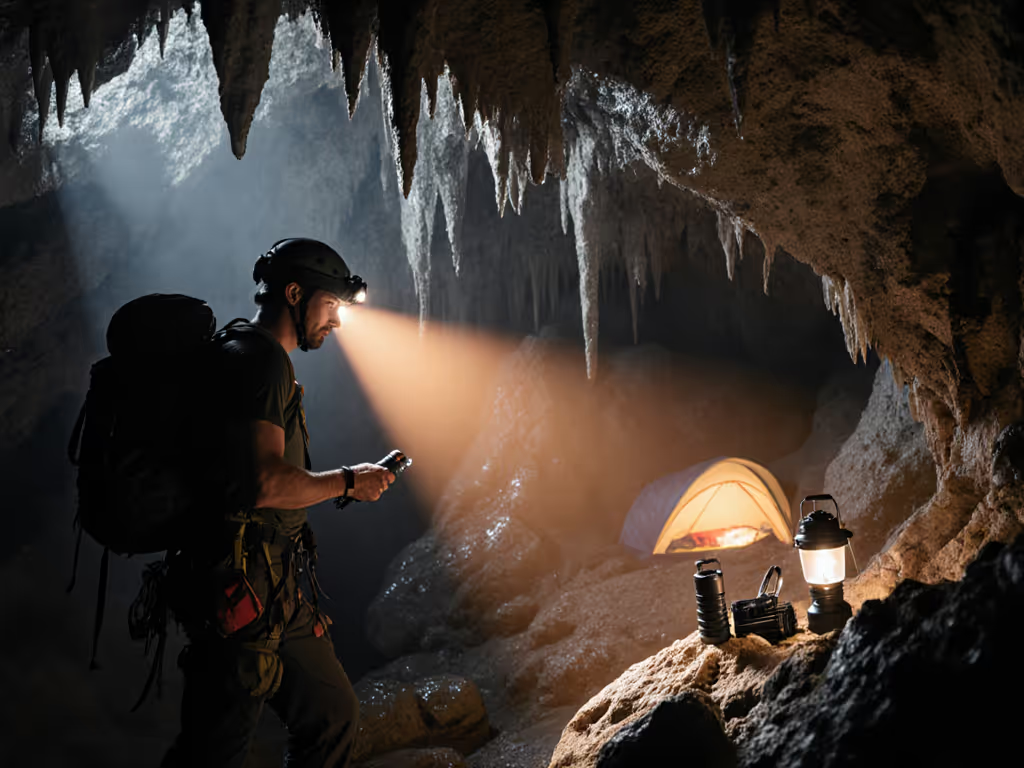
For pre-dawn summit pushes, your lighting needs differ significantly from base camp requirements. "Summit night lighting" should prioritize:
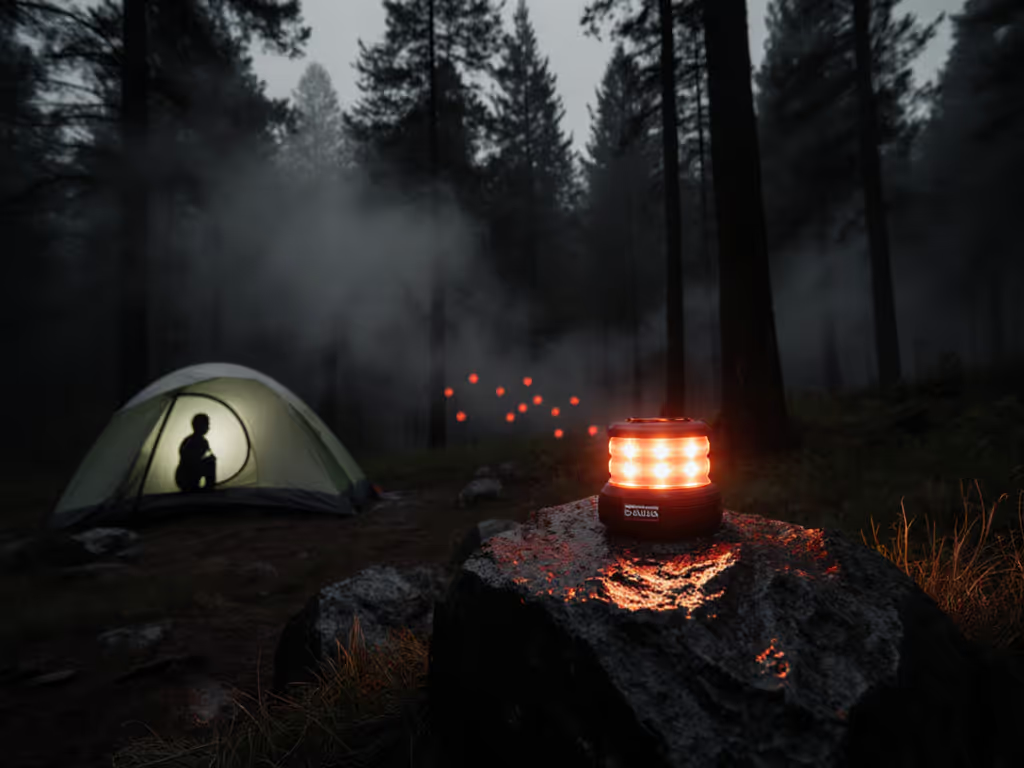
- Red light capability: Preserves both your own and your team's night vision
- Minimal beam spill: Focused forward illumination without upward glare that disrupts others
- Intuitive operation: Controls that can be operated with thick gloves
- Cold-weather reliability: Tested performance at temperatures below -22°F (-30°C)
Many "hunting headlamp" models actually excel here because they're designed for low-light precision without disturbing wildlife. Look for lights with dedicated red channels that don't require cycling through white modes, a crucial feature when you're conserving energy on a steep climb.
Important: Avoid any lights with automatic brightness modes for summit attempts. To reduce stray light and preserve night vision, choose the right beam pattern with our flood vs spot comparison. These can unexpectedly shift to brighter settings when you pass through shadows, ruining your carefully cultivated night vision.
How does "altitude lighting performance" differ from sea-level use?
This is where most lighting reviews fall short, they test products at normal elevations, not in the conditions where you'll actually need them most. True altitude-tested lighting considers:
- Reduced convection cooling: At altitude, thinner air provides less cooling, causing electronics to run hotter and potentially derate output
- Lower oxygen levels: Affects combustion in fuel-powered lanterns (though most modern expeditions use electric)
- Increased UV degradation: Accelerates wear on plastic components and lens coatings
- Temperature differentials: Rapid cooling when moving between sunlight and shade creates condensation issues
When evaluating lights for high-altitude work, look for manufacturers who specifically test at elevation. The best "mountain expedition lighting" products will have documentation showing performance metrics at 10,000+ feet, not just sea level.
What lighting mistakes do experienced mountaineers still make?
Even seasoned climbers often overlook these critical aspects:
Light is hospitality. When your illumination choices consider others' rest and experience, you're creating more than visibility, you're creating community.
- Over-reliance on maximum brightness: Many keep lights on high settings unnecessarily, wasting battery and ruining night vision
- Ignoring CRI (Color Rendering Index): Low-CRI lights make it difficult to distinguish trail features or assess injuries accurately
- Poor battery management: Not accounting for the "cold cranking" effect where batteries deliver less current in freezing temperatures
- Inconsistent beam patterns: Using multiple lights with different beam shapes creates confusing shadow patterns
- Lack of red light discipline: Using white light when red would suffice during group movements
The most common mistake I see? Bringing excessive lumens without considering beam quality. A 3000-lumen light with a poorly designed optic often provides less usable illumination than a 1000-lumen light with proper beam control. This is particularly important for "thin air illumination" where uncontrolled beams scatter more dramatically.
How can I create a sustainable lighting plan for multi-week expeditions?
Rather than chasing maximum lumens, focus on these sustainability principles:
- Battery standardization: Use lights that share the same battery format (18650/21700 cells perform better in cold than proprietary packs)
- Modular design: Choose systems where power sources can be shared between headlamps and lanterns
- Solar compatibility: Ensure your power bank can accept solar input at the voltages your panel produces
- Cold-weather charging: Understand that charging below freezing damages lithium batteries, so plan to warm them before recharging
For extended trips, consider a primary high-CRI white light for essential tasks paired with multiple low-power red lights for ambient illumination. This approach preserves both battery life and night vision while creating that calm, star-filled environment that makes mountain camping special.
Further Exploration
Lighting choices for high-altitude expeditions extend far beyond simple brightness metrics. When you approach lighting as a system designed for human needs and environmental respect, you create conditions where rest comes easier, safety improves, and the mountain environment remains undisturbed. I encourage you to think beyond lumens and consider how your lighting choices affect not just your own experience, but those of your team and the natural world around you.
For those interested in diving deeper into the science of light and human physiology, I recommend exploring resources from the International Dark-Sky Association and the Lighting Research Center at Rensselaer Polytechnic Institute. Understanding how different light spectra affect melatonin production can transform your approach to nighttime mountain activities. Remember, on the mountain, how you illuminate your world reflects your respect for it, light is hospitality, not conquest.
Related Articles