Comply with National Park Lighting Rules Safely
By Naoko Sato • 11th Dec
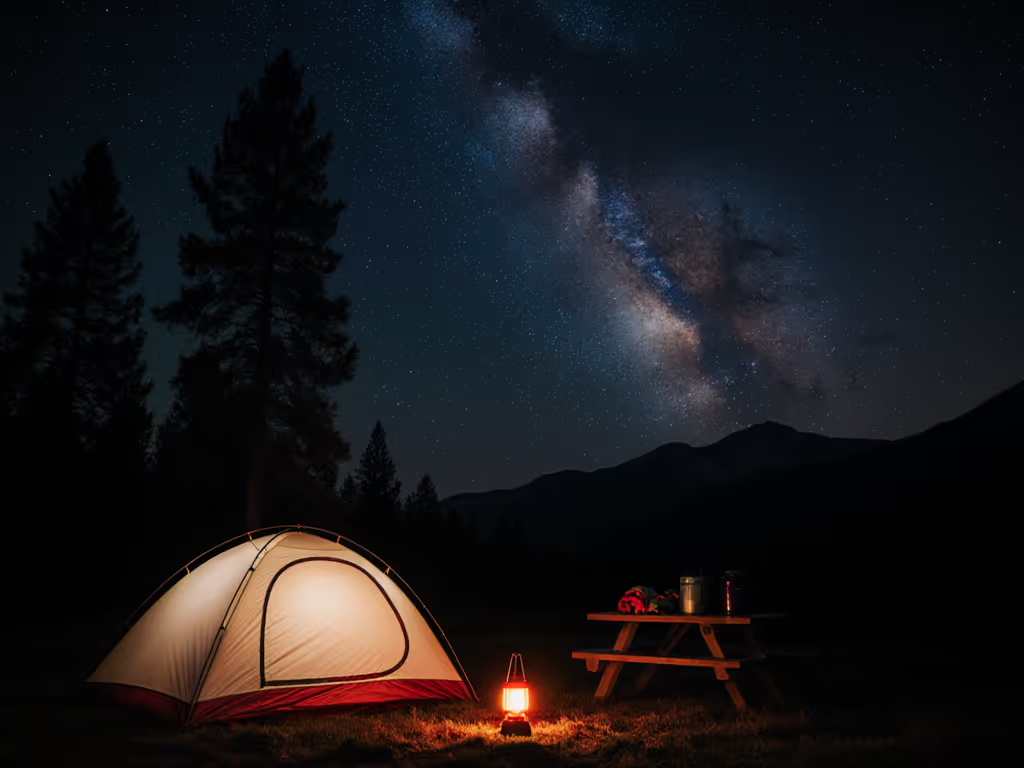
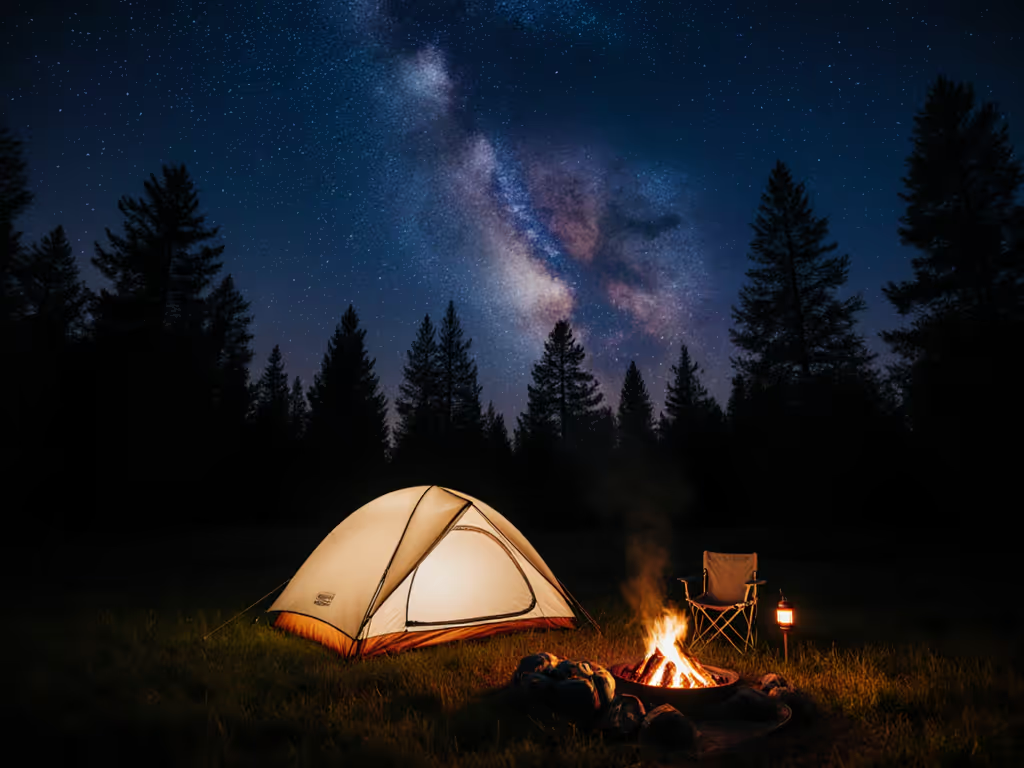
Understanding national park lighting regulations and selecting dark sky compliant camping lights isn't merely about avoiding fines (it's about honoring a fundamental design principle: light should serve people and place, never dominate them). As a human-centered lighting designer who has translated circadian science into campsite choices for over a decade, I've learned that thoughtful illumination transforms not just visibility, but the entire camping experience. When regulations guide our lighting choices, we preserve what makes parks special: natural darkness, ecological balance, and that profound sense of connection with the night sky. Light is hospitality.
Why do national parks have specific lighting regulations?
National parks implement lighting rules to protect multiple interconnected values. For a deeper overview of why parks emphasize darkness and how campers can adapt, see our dark-sky-friendly camping explainer. As documented in National Park Service (NPS) Director's Order 50C, these policies balance human safety with ecosystem preservation and wilderness character. Research confirms that artificial light disrupts nocturnal wildlife behaviors, interferes with astronomical observation, and fragments the "solitude or primitive and unconfined recreation" experience that defines wilderness areas.
The NPS has a dedicated lightscape management policy stating they will "preserve, to the greatest extent possible, the natural lightscapes of parks and minimize light that emanates from park facilities." This isn't arbitrary restriction; it is science-based conservation recognizing that darkness is a resource as valuable as any geological feature. Parks like Arches and Zion explicitly prohibit certain lighting in backcountry areas not to inconvenience visitors, but because improperly managed light can trigger disorientation in migratory species and disrupt nesting patterns for creatures like sea turtles.
What are the ecological impacts of inappropriate lighting?
Artificial light at night affects ecosystems in documented ways:
- Alters predator-prey relationships through disrupted hunting patterns
- Interferes with circadian rhythms of both flora and fauna
- Causes orientation issues for migratory birds and insects
- Affects photosynthesis cycles in plants
- Disrupts natural foraging behaviors in mammals and nocturnal creatures
These impacts accumulate rapidly. A 2021 study of night sky preservation noted that even seemingly minor light leaks from campsites can alter behavior across significant ecological zones, demonstrating why seemingly small lighting choices carry substantial responsibility.
What are the key lighting restrictions I should know before camping?
While specific regulations vary by park and season, certain patterns emerge across protected areas. Unlike general outdoor recreation areas, national parks typically enforce:
General lighting restrictions across most parks
- Frontcountry vs. backcountry distinctions: Most developed campgrounds permit shielded lighting, but backcountry sites often restrict lighting to headlamps with red-mode capabilities during night movement
- Cutoff times: Some parks (like Great Sand Dunes) implement voluntary "quiet hours" with lighting restrictions, while others enforce specific curfews
- Fixture requirements: Unshielded or upward-facing lights are prohibited in many parks to prevent skyglow
- Color temperature limitations: Increasingly, parks recommend or require warm-white (2700-3000K) or amber lighting to minimize ecological disruption
Park-specific restrictions to verify before your trip
- Rocky Mountain National Park: Requires local firewood and specific lighting controls in certain zones
- Great Sand Dunes: Provides guided recommendations for night visits including moon cycle planning and proper lighting etiquette
- Zion, Arches, and Bryce Canyon: Prohibit all fires beyond pressurized gas-fueled stoves in backcountry areas
- Joshua Tree: Following the York fire that burned over 90,000 acres, implemented stricter lighting and fire regulations
Always check with the National Park Service for up-to-date regulations at the specific park you're planning to visit prior to your trip. Regulations are dynamic and shift with seasonal conditions and ecological concerns.
What does "dark sky compliant" actually mean for my camping lights?
Dark sky compliance isn't a standardized certification but rather describes lighting that minimizes skyglow and ecological disruption. When selecting protected area lighting for national parks, these technical characteristics matter most:
Essential characteristics of dark sky compliant camping lights
- Color Temperature: Maximum 3000K (preferably 2700K), with red/amber night vision modes below 2000K
- Beam Control: Fully shielded fixtures that direct light downward with minimal upward spill
- Intensity: Appropriately dimmable to the lowest useful level (often 5-15 lumens for path marking)
- Cutoff: Hard cutoff above 90 degrees horizontal to prevent skyward radiation
- CRI (Color Rendering Index): Minimum 90 for warm-white modes to support accurate task lighting without increasing brightness needs
These specifications align with the NPS's six principles of sustainable outdoor lighting designed to protect night skies. If you're choosing color temperatures for your kit, compare the tradeoffs in warm vs cool white camping lights. When light functions as intended (illuminating specific tasks without dominating the environment), campers experience the additional benefit of preserved night vision. This creates the paradoxical effect where less light actually provides better functionality.
How does lighting affect both my experience and the park ecosystem?
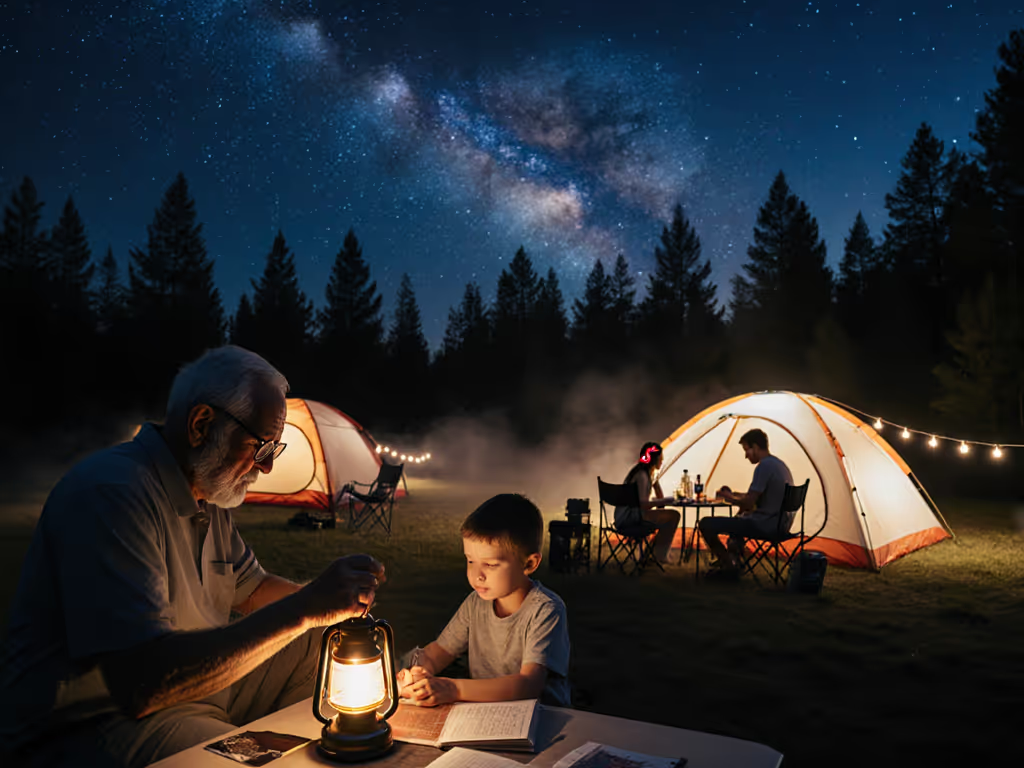
Many campers don't realize their lighting choices create ripple effects beyond their immediate site. Blue-rich white light (above 4000K) disrupts melatonin production in humans, making sleep difficult (something I observed firsthand when my toddler repeatedly woke under harsh cool lighting during family camping). Learn how red light supports sleep and circadian rhythms when camping. By switching to 2700K LEDs with proper shielding, we preserved natural sleep rhythms while maintaining sufficient visibility for safety. Gentle light makes every voice easier to hear.
Human-centered impacts
- Sleep quality and circadian regulation
- Preservation of night vision for safety and stargazing
- Enhanced ambiance and conversation quality
- Reduced glare for safer navigation
- Family-friendly environment for children's sleep cycles
Ecosystem considerations
- Minimal disruption to nocturnal wildlife behaviors
- Reduced interference with astronomical observation
- Preservation of natural light cycles for plant life
- Prevention of insect disorientation that affects food webs
- Compliance with park-specific habitat protections
This dual benefit (improved human experience alongside ecosystem protection) demonstrates why thoughtful lighting constitutes good campsite citizenship. When your tent camping lights serve specific purposes without dominating the environment, you contribute to the collective experience.
What are the most common lighting mistakes campers make in national parks?
Based on campground observations and NPS reports, these lighting missteps occur frequently:
Top lighting violations and etiquette breaches
- Using phone flashlights with unshielded, blue-rich LEDs
- Employing cool-white (4000K+) lanterns that create excessive glare and skyglow
- Positioning lights to shine into neighboring campsites
- Leaving lights on during "quiet hours" without proper shielding
- Using decorative string lights that exceed recommended brightness levels
Many well-intentioned campers simply don't understand how their lighting choices affect others. The National Park Service lighting standards often specify maximum wattage densities (0.7 watts per square foot in certain areas), but compliance requires more than technical adherence; it demands situational awareness. Consider how your lighting impacts:
- Your immediate site
- Neighboring campsites
- Night sky visibility
- Local wildlife behavior
- Your own group's circadian rhythms
How can I create a lighting setup that respects both park regulations and my group's needs?
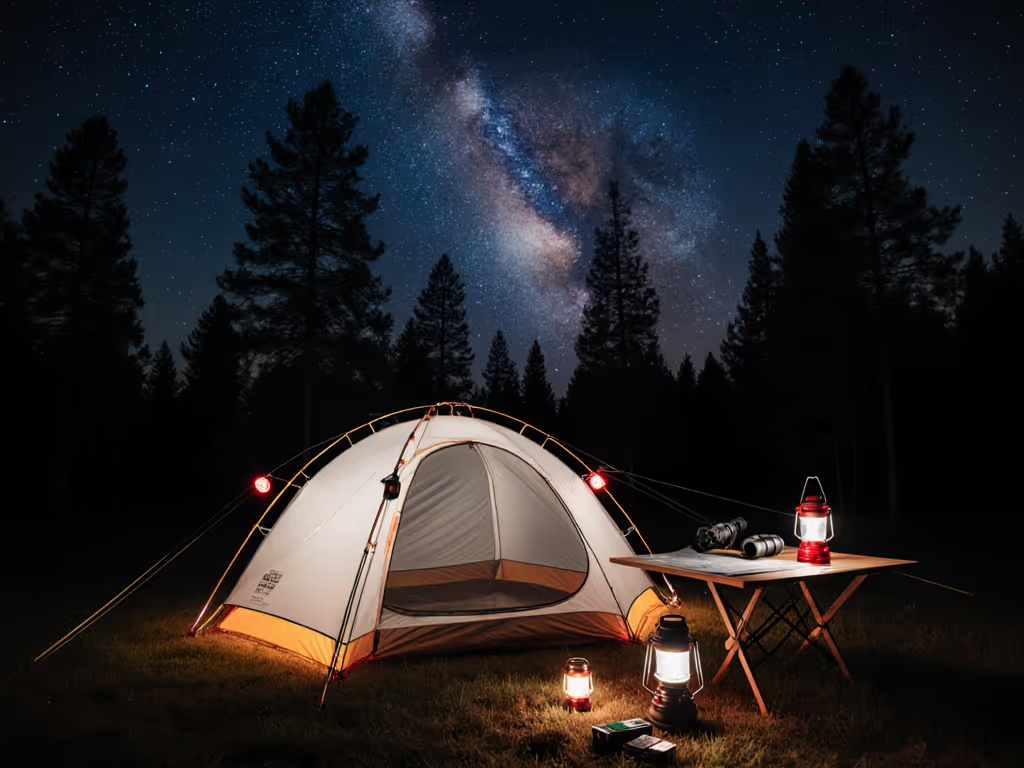
The most successful lighting systems follow a layered approach that addresses specific needs with appropriate tools:
Strategic lighting zones for national park compliance
Task lighting (food prep, gear repair)
- Single-point, directional illumination
- 2700-3000K with high CRI (90+ for accurate color rendering)
- Shielded to prevent spill beyond work surface
- Maximum 200 lumens unless a specific task requires more
Path lighting (toilet, tent access)
- Extremely low-level marking (5-15 lumens)
- Fully shielded downward orientation
- Amber or red spectrum during quiet hours
- Minimal placement, only where a tripping hazard exists For navigation safety, see our comparison of pathway markers vs string lights to light the ground without glare.
Ambient lighting (social area)
- Central, dimmable source
- Warm white (2700-3000K) with soft diffusion
- Maximum height at table level
- Automatically reducing to red mode after bedtime
This zoned approach creates lighting that serves specific purposes without dominating the environment, aligning perfectly with wilderness lighting restrictions while enhancing your experience. The most effective setups use identical color temperatures across all devices to maintain consistent night vision adaptation.
Practical implementation tips for park service lighting rules
When preparing for your next national park trip, implement these evidence-based practices:
- Verify current regulations: Contact the specific park's visitor center 1-2 weeks before departure
- Test your kit: Practice using your lights at appropriate dim levels before your trip
- Shield everything: Use fabric diffusers or simple cardboard baffles to direct light downward
- Prioritize warm tones: Ensure all white light is 3000K or warmer
- Create a night protocol: Establish automatic transition to red light after bedtime
- Check orientation: Ensure all fixtures have hard cutoffs preventing upward light spill
Remember that lighting etiquette extends beyond technical compliance; it is about considering how your illumination affects fellow visitors and the environment. To right-size brightness for each zone, use our lumens camping guide to match brightness to each task. When your lighting choices demonstrate respect for shared space, you contribute to the park's intended experience of solitude and natural darkness.
Conclusion: Lighting as park stewardship
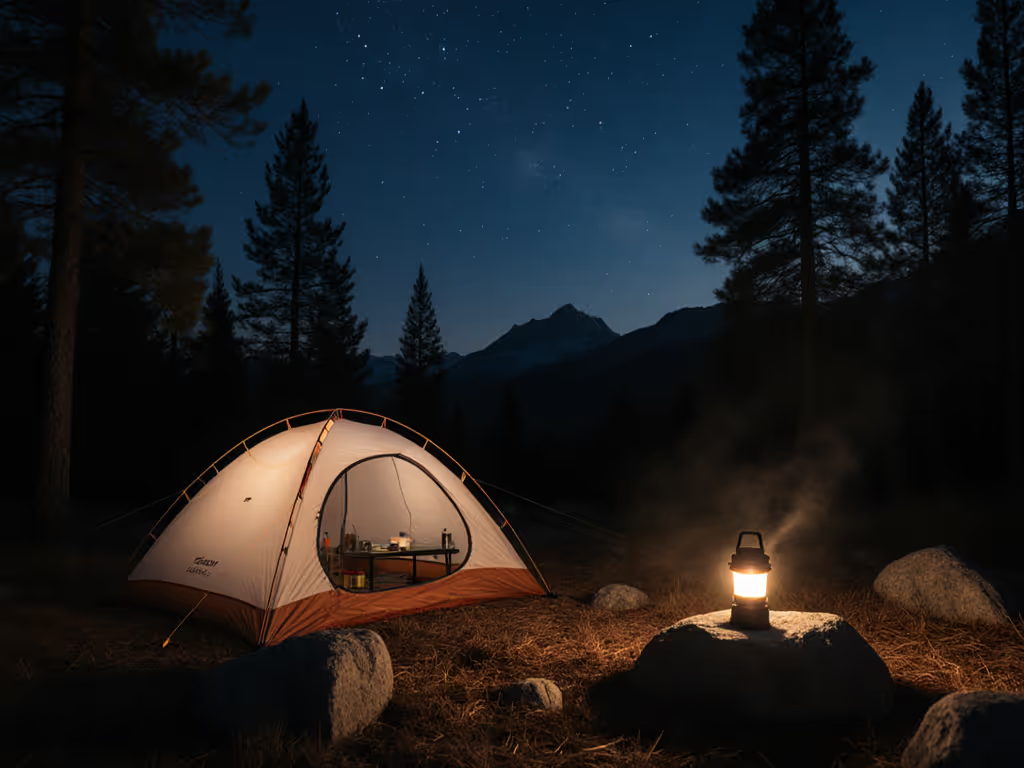
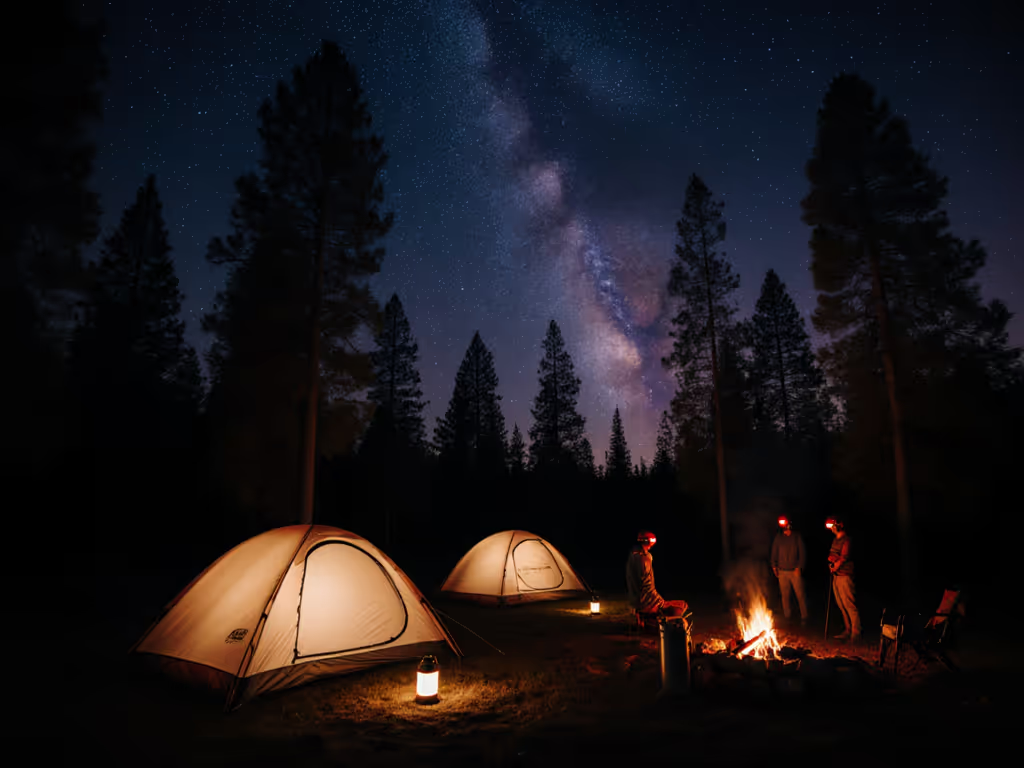
Complying with national park lighting regulations ultimately serves a higher purpose: preserving the darkness that makes these places transformative. Properly implemented lighting doesn't just follow rules; it honors the fundamental truth that light should serve people and place, never dominate them. By selecting dark sky compliant camping lights with appropriate color temperature, beam control, and intensity, you preserve not just the night sky, but the very essence of why we seek out protected areas.
When planning your next trip, consider resources from the International Dark-Sky Association and National Park Service night sky programs for deeper understanding of lighting science in natural areas. These organizations offer park-specific guides, lighting calculators, and technical specifications that transform compliance from restriction into opportunity (for better sleep, richer stargazing, and more meaningful connection with the natural world).
Related Articles