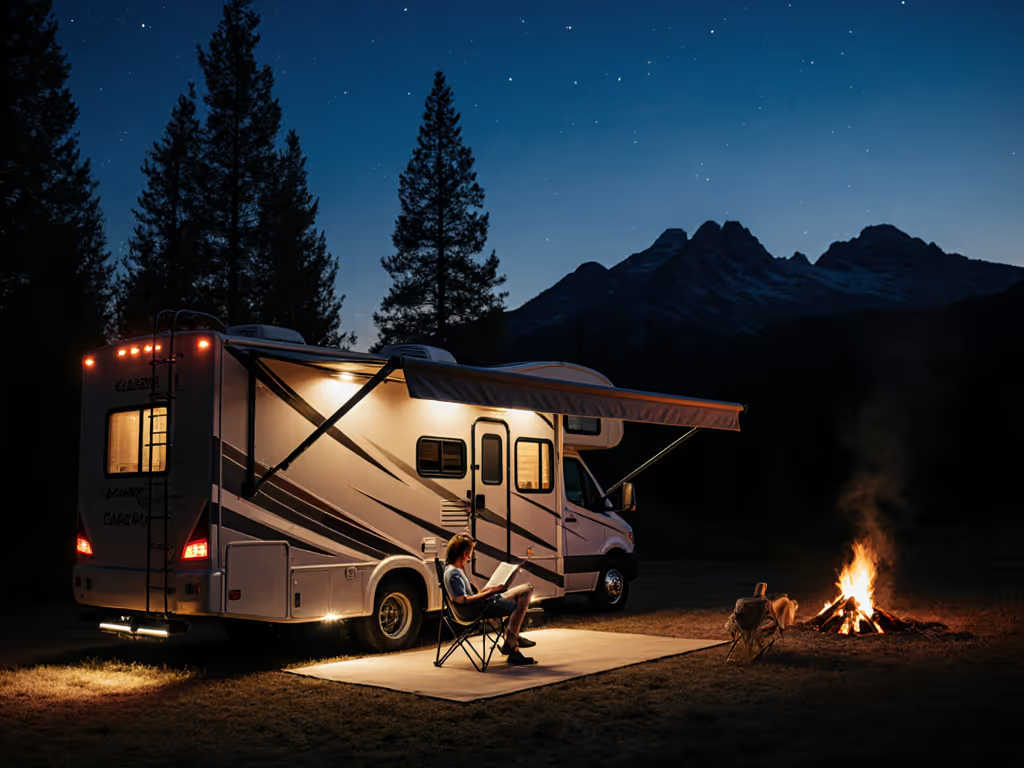
Family Vision-Friendly Lighting: A Multi-Gen Camping Guide
By Sofia Alvarez • 2nd May
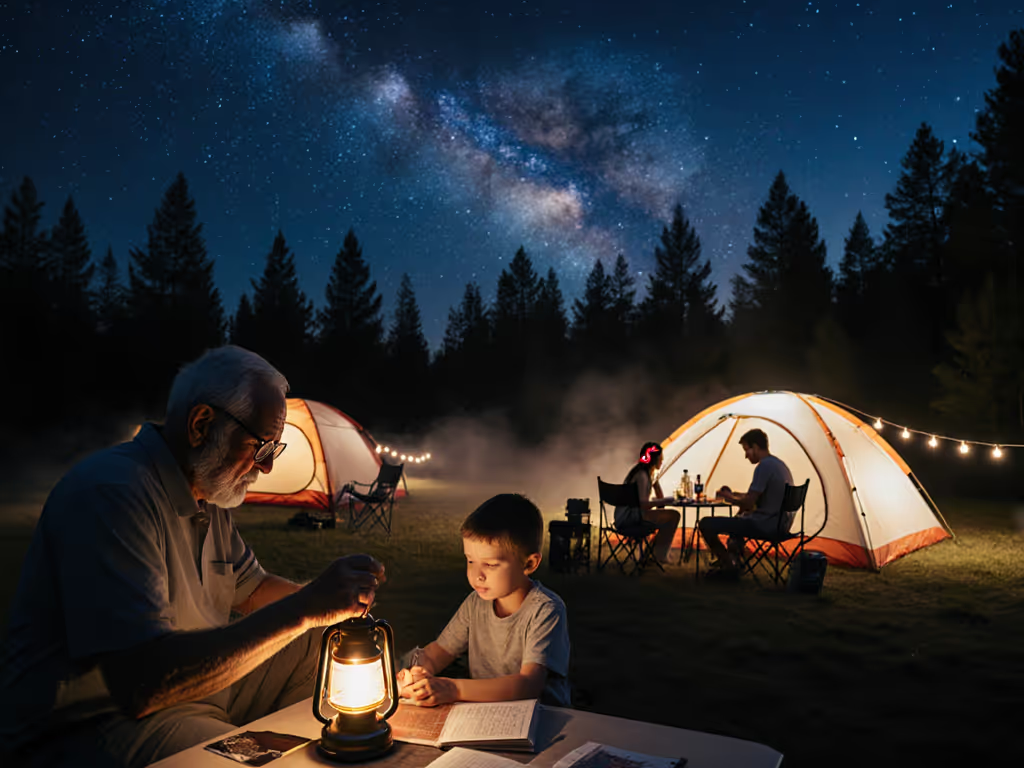
The best family vision-friendly lighting at camp doesn't announce itself. It emerges slowly (a parent reading a map, a child checking tent pegs, grandparents settled at the picnic table), each person seeing exactly what they need without glare, shadow, or that electric-cold harshness that makes your pupils shrink and your mood tighten. Multi-generational camp lighting demands more than lumens; it requires careful choices about color temperature, brightness control, and the human warmth that brings generations closer instead of scattering them in separate pools of light.
I think of my grandfather's brass lantern, always at the center of our picnic table. It was loud (it hissed and smelled of fuel), but the light it made was honest. We could see each other's faces. The table looked alive. Modern camp lighting offers us a chance to capture that feeling with different tools: warm, high-CRI LEDs, matte diffusers, and interfaces so simple that even tired children can manage them. The goal isn't novelty; it's a return to a simpler principle: light that lets people be together, awake and comfortable, without stealing the night.
Why Multi-Generational Matters
Vision changes across a lifetime. A ten-year-old's eyes adapt to darkness in roughly twenty minutes; a sixty-year-old may need forty-five. A baby's melatonin system is fragile; bright blue-white light at 8 p.m. suppresses sleep for hours. Learn how camp lighting affects circadian rhythms in our sleep and light guide. A teenager navigating a dark trail needs instant, sharp visibility. A parent preparing dinner needs accurate color rendering to check if fish is cooked through. A grandparent with presbyopia (age-related farsightedness) benefits from larger, warmer light pools where shadows don't hide hazards.
One lighting approach (one bright headlamp, one cool-white lantern) serves nobody well. Instead, the camp thrives on layering: a warm, high-CRI headlamp for close work; a dimmable, warm area light for gathering; a red or amber option for night navigation that preserves dark adaptation; and perhaps a soft path marker so young children feel secure reaching the bathroom at night. Each layer is intentional. Each respects the different needs in the group.
The Vision Problem: Color Temperature and CRI
When camping retailers default to 5000-6500K (daylight-cool white), they're optimizing for perceived brightness and lumen-per-watt efficiency, not human comfort or vision accuracy. Cool light works fine on a construction site or surgical floor. At camp, it costs you twice: it washes out warm tones (making food look unappetizing, first-aid assessment harder), and it tells your circadian system to stay awake. For a deeper look at color temperature trade-offs, see warm white vs cool white.
High color-rendering index (CRI) matters equally. CRI measures how faithfully a light source reveals an object's true hues. A 70 CRI headlamp will render a child's skin tone flat and waxy; a 95+ CRI lamp reveals the actual warmth, making faces and emotions legible across the tent. Cooking by 95 CRI 3000K light feels natural; you spot when meat is seared, when vegetables are tender. Kids settling into sleeping bags don't fight an eerie, sterile glare.
The practical target for camp: 3000K (warm white) with 90+ CRI for social/cooking/reading light. Pair it with dimmable controls (not just on/off, but 10% to 100% output), so you can adapt to mood and task. For navigation, a red or deep-amber mode (typically 620nm wavelength) preserves night vision and melatonin, crucial for anyone walking to the bathroom or checking on sleeping children without waking the whole site.
Building a Layered Kit
Instead of one "do-it-all" lantern, think in systems. Sofia Alvarez doesn't chase superlatives; she chases restraint in service of people and place.
Primary task light: A rechargeable headlamp with 3000K, 90+ CRI, and red-mode access via a dedicated button (not buried in a menu). Thirty to fifty lumens of warm output is plenty for cooking prep; the red mode runs darker and doesn't require acclimatization. Material matters: look for anodized aluminum bodies with replaceable lens gaskets and strap webbing that doesn't degrade in the sun. Fasteners should be recessed or protected so sand and grit don't jam the mechanism.
Ambient light for gathering: A dimmable lantern (battery or USB-rechargeable) in warm white, preferably with a diffused or frosted polycarbonate or glass shade that softens hotspots. Sixty to one hundred lumens at peak is enough for a table of six or seven. A lantern with a carrying strap and stable base (no wobbly plastic feet) feels trustworthy when hung or set amid sleeping children. For resilient, kid-friendly picks, see our family camping lights guide.
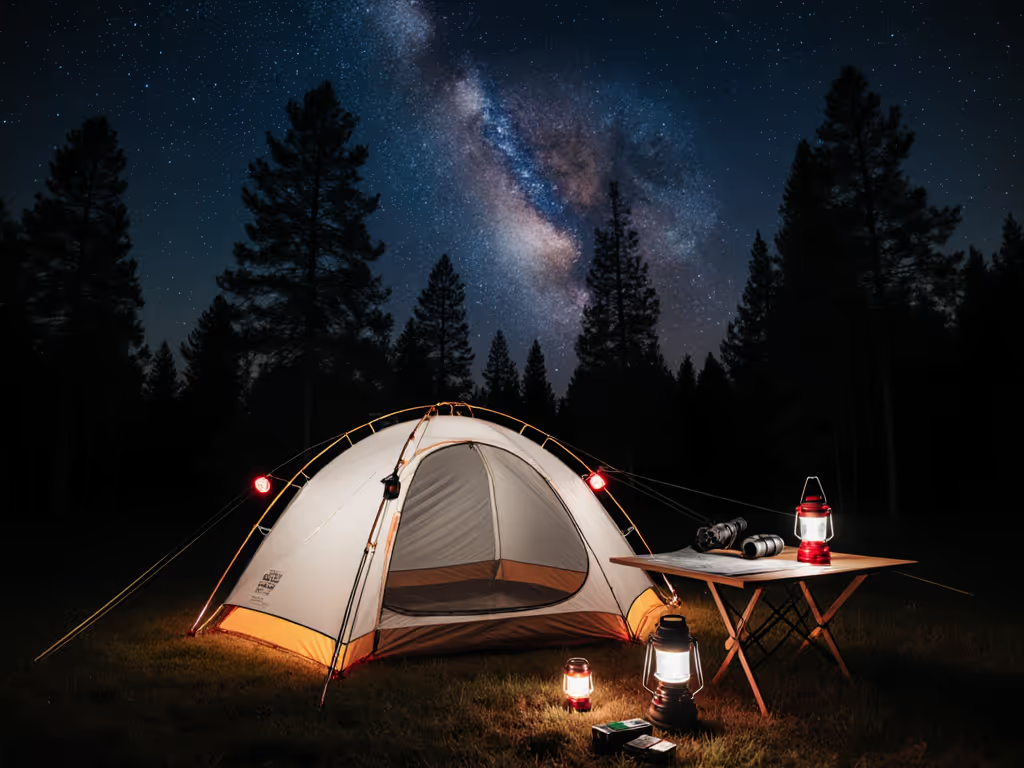
Path and safety markers: Low-power red or amber LED strips or small lights on stakes or tied to tent guy-lines. These should be very dim, just enough to outline a path without broadcasting to neighboring camps. Some families choose replaceable-battery options here to avoid charging anxiety; ensure the batteries are AA or 18650 cells that match your main kit's charging strategy. Design you barely notice is doing its best work: the light shouldn't feel like a safety theater; it should feel like a practical whisper.
Backups and charging: Carry a small USB power bank (5000-10000 mAh) charged before the trip, plus a dedicated USB-C charging cable for headlamps and lanterns. If you're combining multiple battery sizes (AA, 18650, built-in Li-ion), you've already lost: complexity breeds failures. Aim for a single ecosystem. Label all cells with permanent marker before departure; include the charge date.
Dark Skies, Etiquette, and Sleep
Multi-generational camping often happens in state parks or family campgrounds where dozens of tents cluster within shouting distance. Bright light spilling from your site disturbs neighbors' sleep and erases the stars. Considerate lighting is invisible to others.
Shield your lantern with a matte fabric shade or locate it low on a table, angled away from neighboring sites. Keep headlamp beam angle tight; if you're hiking between tents, point the lamp down, not ahead at face level. Use red mode after dusk; it is a covenant with the night and a gift to other campers' sleep. Kids wake fast under white light; they settle peacefully under amber or red.
The dark-sky movement isn't a luxury; it's an act of respect. When your site stays quiet and dark, the entire campground breathes easier. Stars remain visible. Melatonin cycles stay intact. Children sleep deeper.
Practical Considerations for Cold, Wet, and Duration
Battery performance drops in cold. A Li-ion cell at 32°F (0°C) will deliver perhaps 70% of its rated runtime; at freezing, even less. Keep rechargeable units in sleeping bags or an insulated pack until needed. Alkaline AA batteries hold up better in extreme cold but don't recharge (trade-offs).
Condensation kills lights. Understand IP ratings for weather resistance to choose gear that survives wet conditions. When you bring a cold lamp into a warm, humid tent, moisture forms inside the lens. Let lamps acclimate inside a sealed bag for ten minutes before opening. Dry the exterior and any exposed contacts with a microfiber cloth. A headlamp with a rubberized lens gasket and recessed optics resists fog better than a sealed plastic tube.
For a three-night family camp with five people using headlamps thirty minutes per evening at 50% brightness, plan for 2-3 headlamp charges or four sets of AA batteries. Add 30% reserve. A 10000 mAh power bank with 15W USB-C output will fully recharge two typical rechargeable headlamps in three to four hours (useful if you're car-camping and have solar panels or a vehicle outlet).
Conclusion: A Return to Presence
Family vision-friendly lighting isn't about having the brightest gear. It's about choosing the right warmth, the right dimming, the right colors, and the right restraint, so that generations can gather, eat, play, and rest without glare or gloom, without that commercial-cold discomfort that feels more like an airport than a campfire.
The best camp lighting fades into the background. A parent doesn't think about the headlamp; they see their child's face clearly, warm and real. A grandparent reaches for the lantern not as a tool but as an anchor (steady, reliable, familiar), and the table comes alive the same way it did decades ago, though the technology has changed utterly.
Quiet objects, clear nights. That's the goal. Start by mapping your group's actual vision needs (ages, tasks, night rituals), and let that guide your choices. Choose warm CRI first, dimmers second, dark-mode access third. Standardize on one battery type and USB-C. Test your kit at home, on a patio, for an evening. See what feels right. See what feels like togetherness.
From there, refine. Swap out a cool headlamp for a 3000K unit. Add a red-mode button to your path routine. Carry one extra headlamp and two backup 18650 cells. The kit evolves through use, through small adjustments, through paying attention to what your family actually does at camp, not what a spec sheet promises. That iterative care, that willingness to iterate based on real experience and the people you camp with, is where good camp lighting lives.
Related Articles