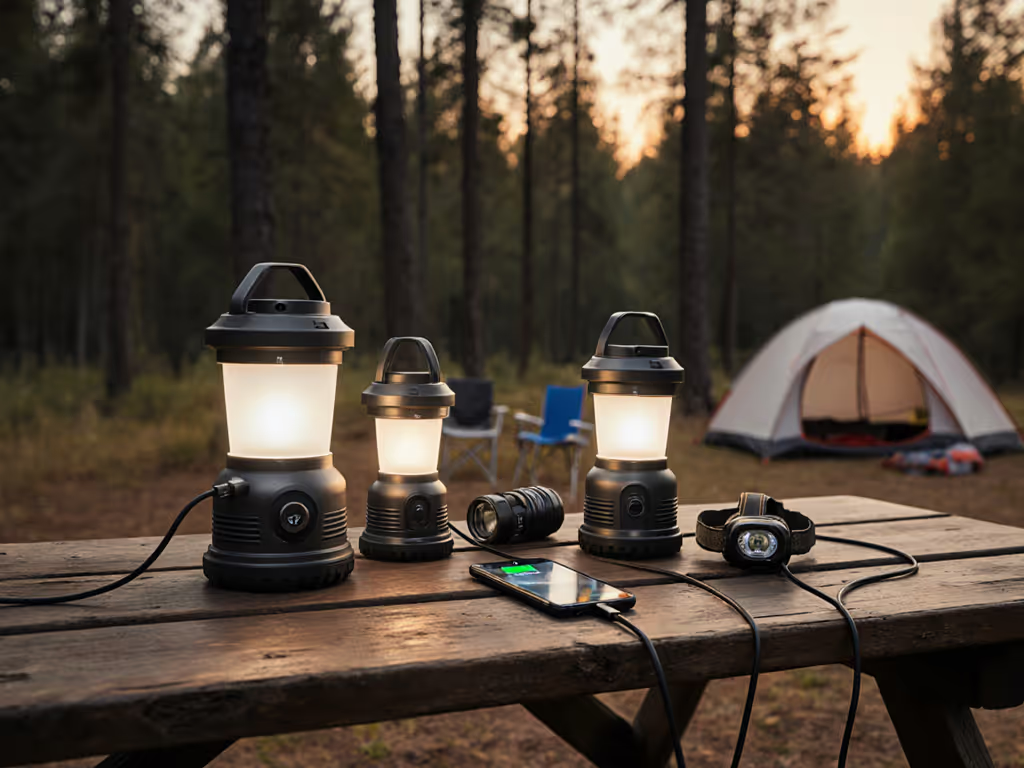
Premium Glamping Lanterns: Tested & Compared
By Naoko Sato • 12th Apr
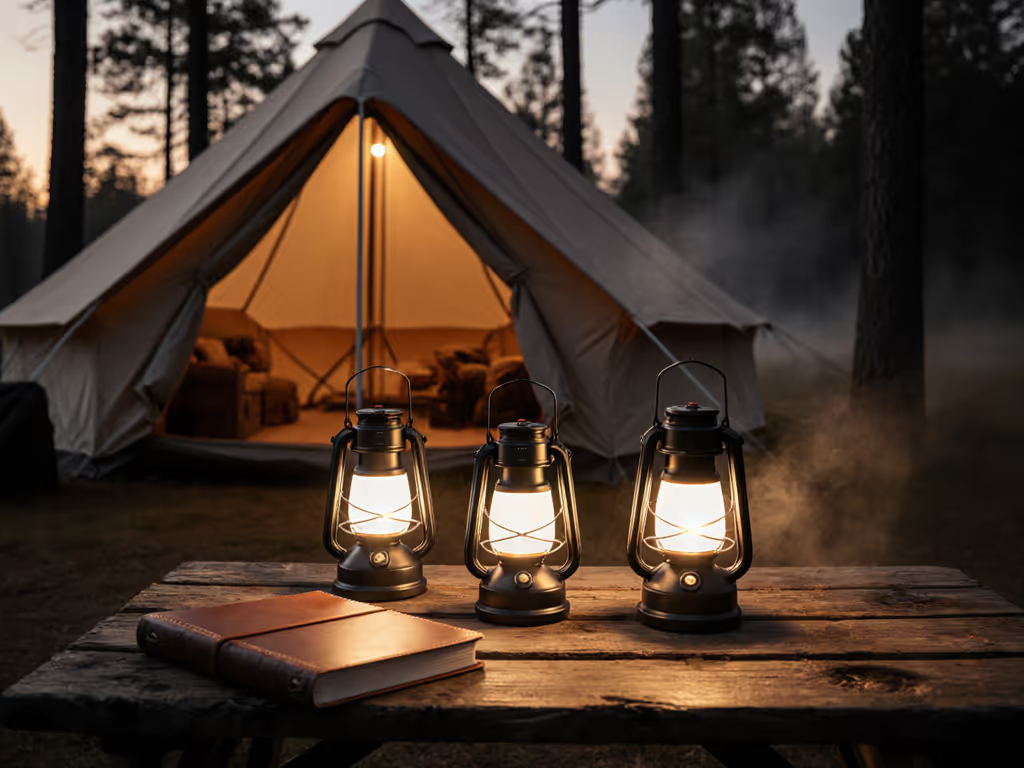
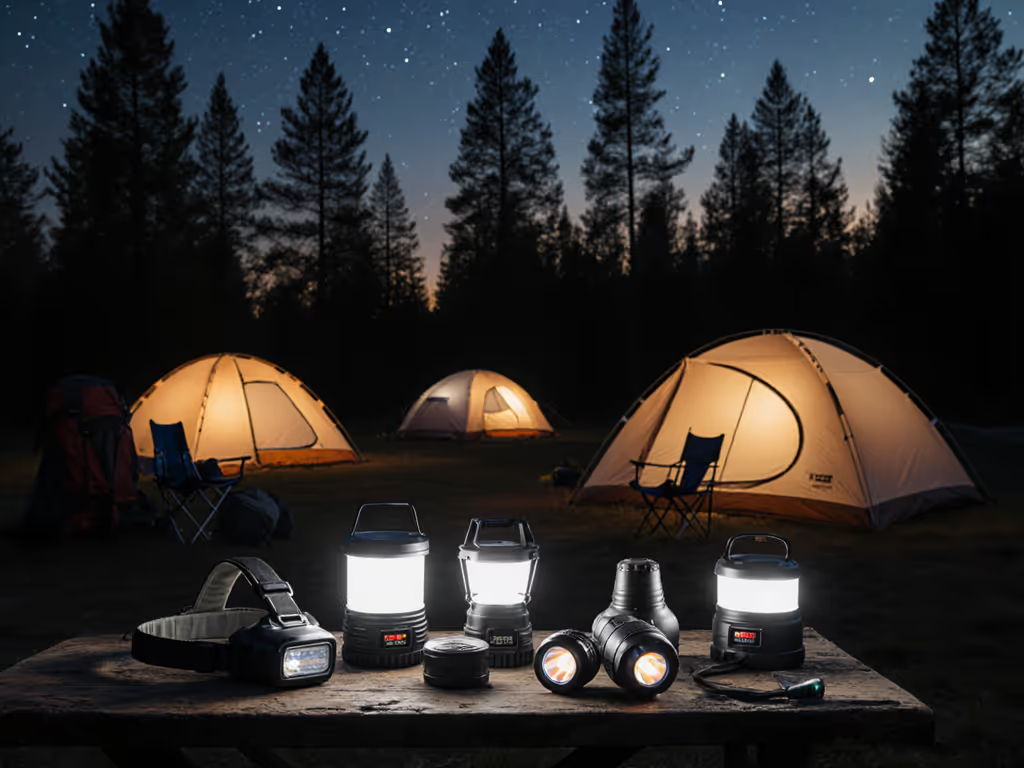
Premium camp site lighting isn't about maximum lumens or novelty features, it's about choosing lanterns that match your group's needs, respect the night sky, and support the rhythm of a good evening at camp. When you're selecting tent camping lights for your basecamp setup, the difference between a harsh, flickering glow and a warm, coherent system often comes down to three factors: color temperature (the warmth or coolness of light), color rendering (how true colors appear), and beam control (where light actually goes).[1][2]
Why Premium Matters for Glamping
Glamping (whether car camping, overlanding, or running a multi-night family basecamp) demands lighting that does more than illuminate. Your lights need to support cooking and first aid without color distortion, preserve your ability to see stars, and create an atmosphere where people naturally gather and talk rather than squint. Budget camping lights often rely on cool-white LEDs (around 5000-6500K) because they're cheap to manufacture; they're also the worst choice for evening ambience and sleep.[1][2] A premium lantern typically offers warm color temperatures (2700-3000K), measurable color rendering index (CRI) above 90, and options for dimming and beam shaping.
Gentle light makes every voice easier to hear.
This isn't marketing, it's ergonomics. When light is warm, dimmable, and free from harsh glare, your pupils can relax, your eyes stay adapted to dusk, and the group naturally settles into conversation rather than chasing visibility. Premium lanterns cost more partly because they integrate these human-centered features from the start.
Key Specifications to Understand
Before comparing models, you need a shared vocabulary.
Color Temperature (Kelvin or K): Measured on a scale from warm (2000-3000K, like candlelight) to cool (5000K+ and beyond, like midday sky). For camp ambience and sleep quality, 2700-3000K is ideal for evening and night use. Cool white (5000K+) should be reserved for task work only - if at all after dusk.
Color Rendering Index (CRI): A 0-100 scale showing how accurately a light renders colors. A CRI of 90+ means skin tones, food, and fabrics look natural; anything below 80 starts to flatten and distort colors, which is problematic when sorting gear or treating a scrape.
Lumens and Beam Pattern: Total light output matters less than where that light goes. A focused beam with a defined spill zone is more useful and courteous than a diffuse glow that washes over neighboring campsites. Lanterns typically range from 200 lumens (intimate, low-impact) to 1000+ lumens (bright workspace).[2] For a practical breakdown of brightness by activity and campsite size, see our Lumens Camping Guide.
Dimming Range: A lantern that dims smoothly from full brightness to 5-10% is far more versatile than one with fixed steps or no dimming at all. Deep dimming also stretches battery life significantly.
Top Premium Lanterns: What Tests Show
Among extensively tested top camping lanterns, several emerge as reliable choices across different use cases and budgets.[1][2] If you're weighing mid-price alternatives with verified runtimes and warm light measurements, start with our head-to-head camping lanterns comparison.
Goal Zero Lighthouse 600
Testers rank the Goal Zero Lighthouse 600 among the best for durability, brightness, battery life, and value.[1] It delivers solid performance in a compact format and integrates into Goal Zero's wider solar and power ecosystem, useful if you're building a multi-device charging strategy. The warm tint option aligns with evening use, though you'll want to confirm the actual CCT and CRI before purchase, as marketing specs often overstate color fidelity.
BioLite AlpenGlow 500
The BioLite AlpenGlow 500 stands out as the most feature-rich option, earning praise for flexibility and user experience.[2] Premium lanterns often include diffusion layers, app integration, or modular attachment points. BioLite's design philosophy typically emphasizes clean industrial aesthetics and intuitive controls, priorities that often correlate with thoughtful thermal management and battery longevity.
Black Diamond Orbiter 650
The Black Diamond Orbiter 650 combines tested brightness, compact weight, and a reputation for durability.[1][8] Black Diamond's product line frequently appeals to users who value simplicity and field reliability, though specs like exact CRI and warm-temperature options should be verified before purchase.
LuminAid Packlite Max 2-in-1
For ultralight and backpacking-focused groups, the LuminAid Packlite Max 2-in-1 at $63 offers strong value, especially if you're layering headlamps and area lights rather than relying on a single bright lantern.[2] Its dual-function design (lantern and headlamp) appeals to travelers who want fewer pieces.
High-Output Options
Also highlighted are the LE 1000LM LED Lantern and LightUpCamp LED Solar Powered Foldable Camping Light, both maxing out at 1000-2400 lumens.[2] These suit large group camps or bright workspace needs, but require robust power planning and will generate significant spill unless carefully shielded.
Building a Cohesive Kit: Beyond Single Lanterns
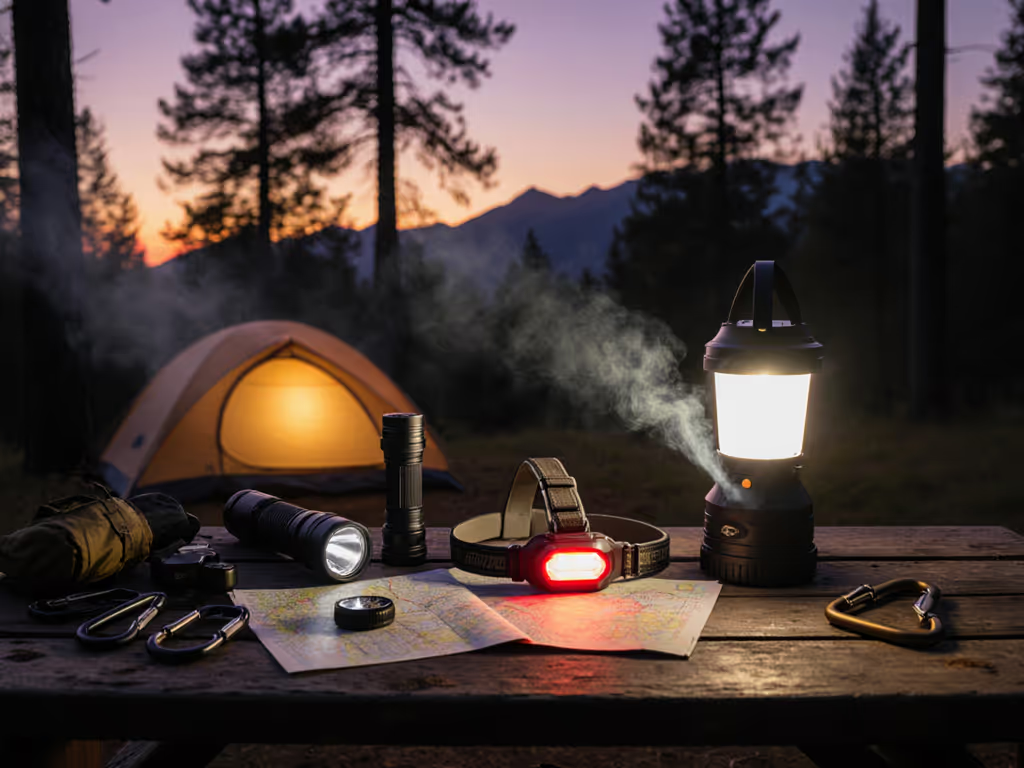
Premium outdoor lighting for glamping isn't one lantern, it's a system. Consider this layered approach:
Basecamp Lantern (400-600 lumens, 2700-3000K, dimmable): Your workhorse. Positioned centrally, slightly above head height on a tripod or hung from a canopy, it defines the camp's social hub without dominating peripheral vision.
Task/Cooking Light (optional, 200-400 lumens, high CRI): Positioned near the kitchen area. Warm with excellent color rendering ensures food looks appetizing and you can read a thermometer or spot small objects without strain. For tested setups and safe brightness targets, see our camp kitchen lighting guide. This light can be slightly brighter than the social lantern but should still allow you to protect the pupil, meaning no harsh glare directly into anyone's eyes.
Path and Boundary Markers (20-100 lumens, 2700K, heavily shielded): Low-level amber or red lights guide people to facilities or tricky terrain without waking sleeping children or blasting neighboring campsites. These are often overlooked but are the mark of a camp run by someone who understands etiquette.
Headlamps or Utility Lights (each user): Small, dimmable, with red mode for night vision. These remain personal tools and shouldn't substitute for site lighting.
Power Planning: The Hidden Complexity
One reason premium lanterns command higher prices is often their power architecture. A well-engineered lantern will use standard, replaceable battery cells (like 18650 or 21700 lithium-ion) rather than sealed proprietary packs, offer USB-C charging (not Micro-USB), and provide clear runtime graphs at different brightness levels. Not sure which cells or chemistries to run? Our lantern batteries guide compares rechargeable vs disposable options with long-term cost analysis.
When building your kit, calculate: group size × trip length × hours-per-night you want light × number of lanterns. For a family of four on a three-night trip with one 500-lumen lantern dimmed to 50% for 4 hours per night, you're looking at roughly 6000-8000 mAh of capacity, with a 20-30% reserve. Mismatches, running out of power mid-trip or carrying far more battery than needed, are frequent sources of camp stress. Premium options often integrate into ecosystems with shared charging hubs, solar panels, and power banks, reducing decision fatigue.
Addressing the Warm-Light Question
You may encounter recommendations for 5000K or "daylight" lanterns under the rationale that brighter = safer or more useful. This is a false choice. A 2700-3000K lantern dimmed to full brightness provides ample task lighting for cooking and first aid, supports eye comfort and sleep, and preserves dark adaptation for stargazing or night hiking.[1][2] For the science and real-world tradeoffs, read our warm vs cool white guide. The only argument for cool white is a brief, high-intensity task, and even then, a high-CRI warm light often suffices. If you must have a cool-white option, treat it as a secondary light for specific needs, not your default.
Integration and Etiquette
Premium glamping lighting reflects a commitment to being a good neighbor. Look for lanterns with:
- Diffusers or frosted panels that soften and spread light evenly rather than creating hotspots
- Directional mounting options (not omnidirectional spill)
- Deep dimming so you can reduce output after dark
- Matte or dark finishes on the lantern body itself (not shiny) to minimize reflection
This attention to beam control and glare management is what separates thoughtful design from brute-force brightness.
Practical Comparison Framework
When evaluating lanterns, ask:
- Actual CCT and CRI? Check manufacturer specs and user reviews mentioning warm rendering. "Warm white" is marketing; 2700K at 90+ CRI is specification.
- Dimming range and granularity? Can you dial it down to 10% without flickering? Are there preset steps or smooth control?
- Battery type? Standard, replaceable cells or proprietary?
- Runtime graphs at realistic brightness? Not just 100% and 10%, but 50% and 25%?
- Mounting and diffusion options? Hooks, magnetic bases, diffuser clip-ons?
- Weight and size for your use case? Car camping tolerates heft; backpacking demands ultralight.
- Warranty and repairability? Premium often includes longer coverage and spare-parts availability.
Sizing Your Setup
Weekend car camping (2-4 people, 2-3 nights): One 400-600 lumen warm lantern + one headlamp per person with red mode + optional path markers. Total battery reserve: 8000-10000 mAh.
Multi-night family basecamp (4-6 people, 4+ nights): One 500-700 lumen main lantern + one 200-300 lumen task light + one solar recharging panel (40W+) + path markers + individual headlamps. Aim for 15000+ mAh reserve or a charge-through protocol.
Overlanding or group camps (6+ people, 5+ nights): Layered system with 1000+ lumen hub light (heavily dimmed for evening), 2-3 secondary lanterns in different zones, solar panel(s), and a portable power station. Plan for rotation charging and redundancy.
Conclusion: Choosing With Intention
Premium glamping lanterns aren't luxury, they're practical investments in comfort, safety, and community. The models earning top test ratings, Goal Zero Lighthouse 600, BioLite AlpenGlow 500, Black Diamond Orbiter 650, and others, represent different trade-offs of brightness, weight, battery architecture, and feature set. Your choice depends on trip style, group size, and whether you're building a single lantern or a cohesive kit.
The real premium is in starting with clear specifications (2700-3000K, 90+ CRI, smooth dimming), understanding your power needs upfront, and choosing lights that respect both your group and the night sky around you. A warm, dimmable lantern that serves people and place, rather than one that dominates with unnecessary brightness, will make every trip feel more intentional.
Take time to read tested reviews with runtime measurements, compare against your specific trip profile, and don't hesitate to layer simpler, specialized lights rather than over-relying on a single bright lantern. Your next camp, and your campsite neighbors, will appreciate the thought.
Related Articles