Tent Camping Lights for Multiday Trips: Battery Life Faceoff
By Kai Rios • 2nd Jun
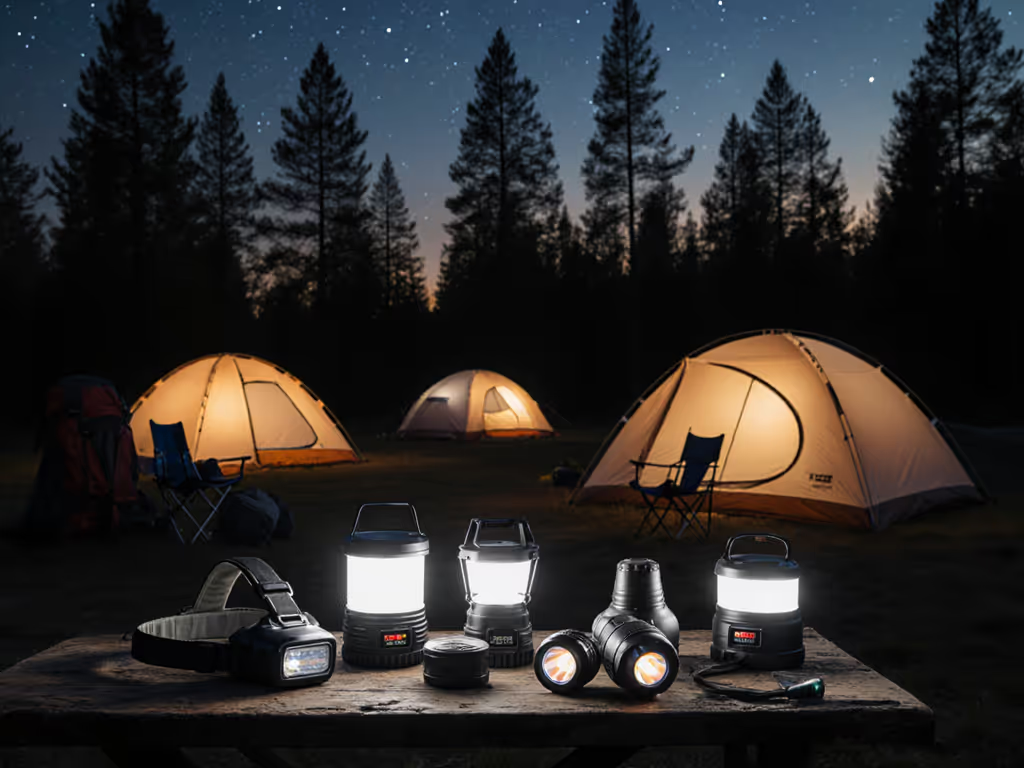
When you stretch from a single overnight to a three to five night camp, tent camping lights stop being about maximum lumens and start being about battery planning and clean multi-day lighting systems. The goal is simple: enough light to move, cook, and read without wrecking the sky or your batteries.
Measure first, then light only what you must.
You don't need more gadgets; you need a kit, not gadgets (pieces that share cells, cables, and a runtime plan).
FAQ 1 - How much light do I really need for a multiday trip?
The short answer: a lot less than most spec sheets push.
Think in lux at the task, not lumens at the LED. If you're new to light output, see our lumens camping guide.
Practical target levels
- Inside the tent, winding down / talking: ~5-20 lux at face level
- Reading in the tent: ~30-50 lux at page level
- Cooking / kitchen area: ~20-50 lux at the work surface
- General camp milling around: ~5-10 lux on the ground
- Path markers to the bathroom / trees: ~1-2 lux right at the feet
At typical distances:
- A 5-15 lm very-low mode on a headlamp or lantern, diffused in a tent, is fine for conversation and getting organized.
- 30-80 lm of well-aimed, warm white is enough for most cooking and dish duty.
- 1-5 lm in red/amber is plenty for night path or pee-tree markers.
If you're used to blasting 300+ lm at camp, that's where your extended trip battery life is going.
FAQ 2 - What really kills battery life on multiday trips?
A few predictable culprits:
1. Running "high" or "turbo" by default
Most LED emitters today sit near peak lm/W efficiency at moderate currents.
- Doubling brightness from medium to high often costs 2-3x more power and only looks a bit brighter because of how human vision works.
- Turbo modes are usually for short tasks or search, not for cooking or tent time.
2. Cold temperatures
Below freezing, Li-ion and NiMH cells can lose 20-40% usable capacity, especially under high draw.
- Headlamps that keep the battery on your head or in a pocket fare better than battery boxes out on a strap.
- For extreme condition lighting, assume a runtime hit and plan an extra 30-50% energy for sustained sub-freezing nights. If you're prepping for freezing trips, see our winter tent lights cold-weather battery guide.
3. Standby drain and accidental activations
- Always use mechanical lockouts (slightly unscrew the tailcap or remove/flip a cell) or a reliable electronic lockout.
- Avoid lights that remember high/turbo and turn on in a pocket at 100%.
4. Big lanterns run too bright
Diffuse lanterns feel gentle, so people run them far brighter than needed.
- A full-size lantern at 200-400 lm for hours will flatten packs fast.
- A small, warm lantern at 10-40 lm near the center of camp often gives better ambience and much better lightweight power efficiency.
FAQ 3 - Which battery formats win the multiday 'faceoff'?
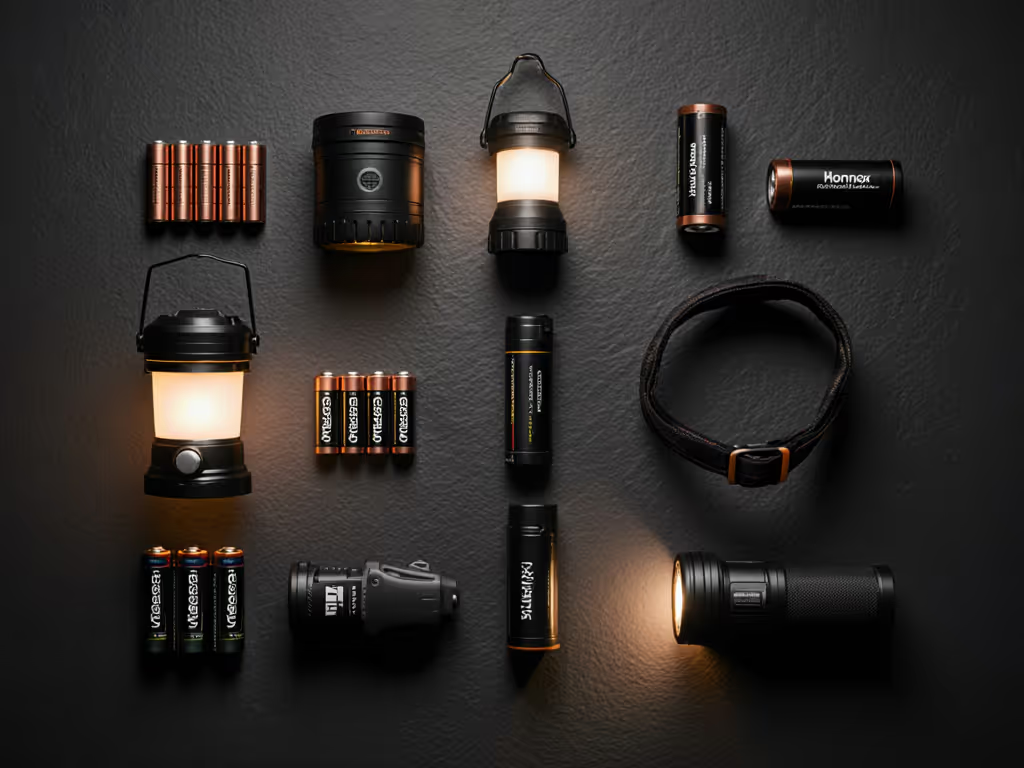
This is where the numbers help. Think watt-hours per gram (Wh/g).
Typical real-world energy (rough ballpark)
| Cell type | Approx. Wh | Typical mass | Wh/g (higher is better) |
|---|---|---|---|
| AAA NiMH | ~1 Wh | ~12 g | ~0.08 |
| AA NiMH | ~2.4 Wh | ~27 g | ~0.09 |
| 14500 Li-ion | ~4.0 Wh | ~20 g | ~0.20 |
| 18650 Li-ion | 9-12 Wh | 45-50 g | ~0.20-0.24 |
| 21700 Li-ion | 13-17 Wh | 60-70 g | ~0.21-0.24 |
| 10,000 mAh power bank (3.7 V) | ~37 Wh | ~200 g | ~0.18-0.20 |
Key takeaways:
- 18650/21700 Li-ion cells are the sweet spot for lightweight power efficiency, especially in headlamps.
- AA/AAA are convenient and widely available but less energy dense; alkalines perform poorly in the cold and at higher draws.
- A decent 10,000 mAh power bank can cover several nights of low-to-moderate lighting for a small group, plus some phone/emergency use.
For multi-day lighting systems, standardizing on one or two Li-ion formats plus a mid-size power bank keeps math and spares simple. For a deeper breakdown of battery types and long-term costs, see rechargeable vs disposable camping batteries.
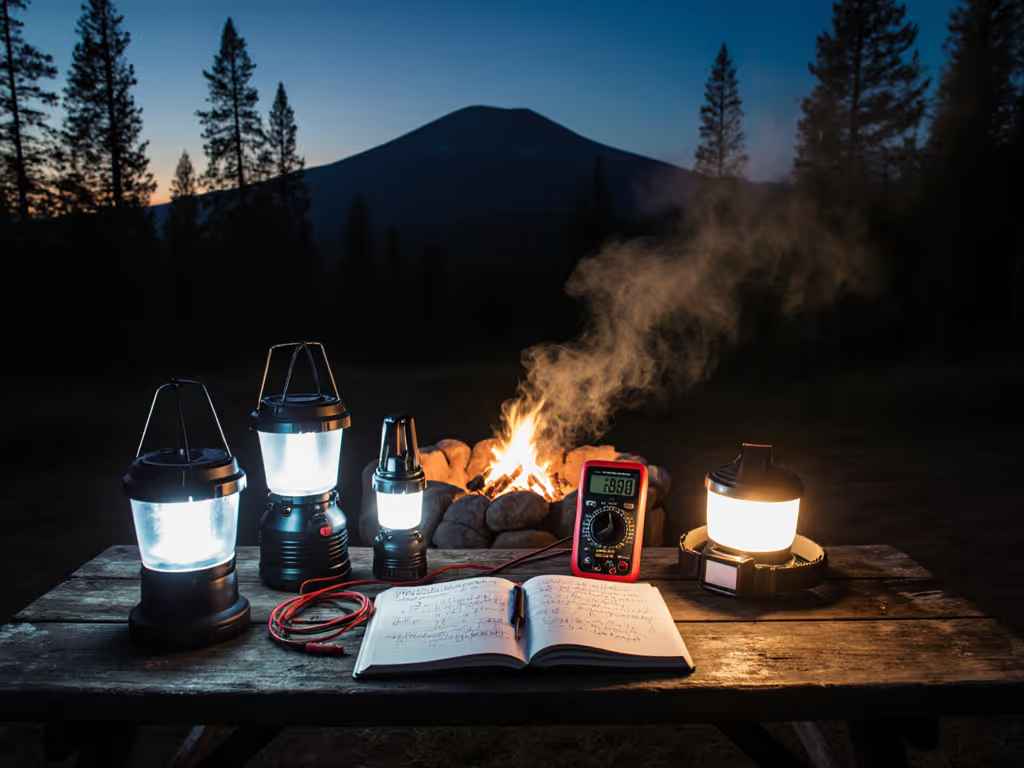
FAQ 4 - How do I actually calculate runtimes for my kit?
You don't need lab gear; a notepad and a few assumptions work.
Step 1: List each light and mode you'll actually use
Example (two adults, three-night trip):
- Headlamp A: 10 lm "low" for hiking to bathrooms and camp chores
- Headlamp B: 2 lm "ultra-low" as a in-tent nightlight for kids
- Tent lantern: 20 lm "warm low" for 2 hours each evening
Step 2: Estimate current draw from mode
If a light is rated (or independent tests show) something like:
- 300 lm for 3 h on an 18650 (assume ~10 Wh cell)
- That's roughly 3.3 Wh per hour at 300 lm.
- So efficiency approx. 90 lm/Wh.
You can then scale:
- 30 lm (1/10 of 300) will use about 1/10 of the power -> 0.33 Wh/h.
- 10 lm uses about 0.11 Wh/h.
These aren't perfect, but they get you within 20-30%, which is enough for planning.
Step 3: Multiply by hours per night and nights
Using the headlamp at 10 lm:
- 10 lm approx. 0.11 Wh/h
- 1.5 hours per night x 3 nights = 4.5 h
- 4.5 h x 0.11 Wh/h approx. 0.5 Wh total
On a 10 Wh 18650, that's only 5% of the cell.
Step 4: Add margin and cold-weather buffer
- Sum energy use for all lights.
- Add 30% buffer for cold, inefficiency, and unplanned use.
For multiday trips, aim for runtimes that cover your plan with a 20-30% reserve.
That reserve is what turns battery anxiety into quiet confidence.
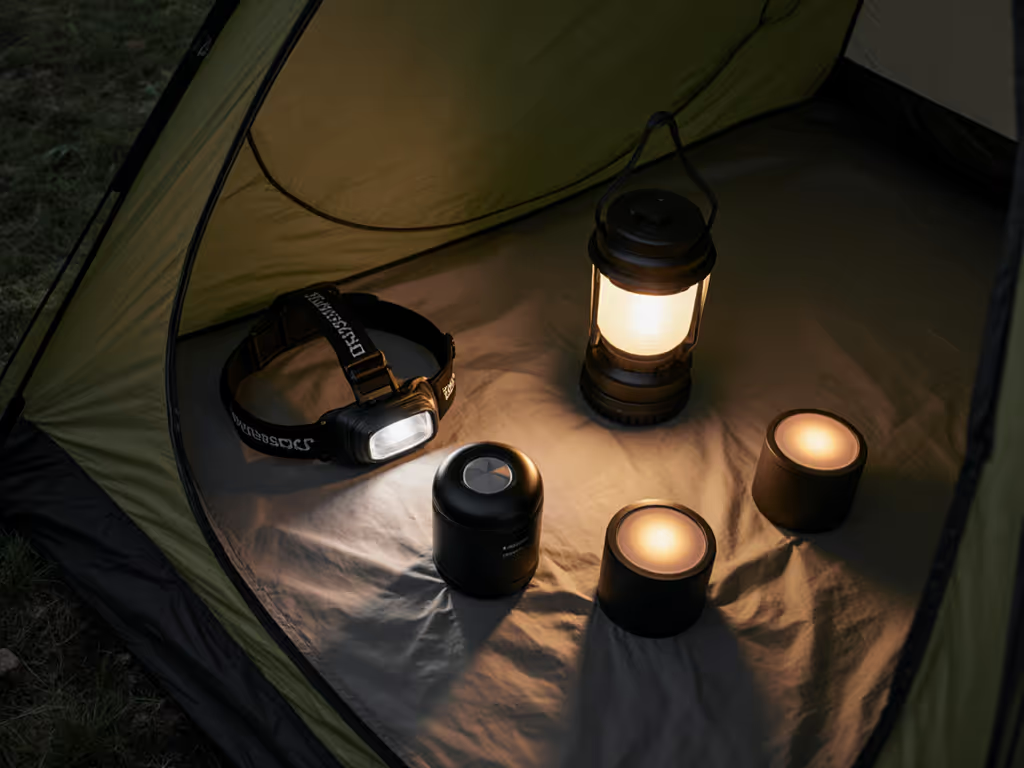
FAQ 5 - What's the best role for each light type in a multiday system?
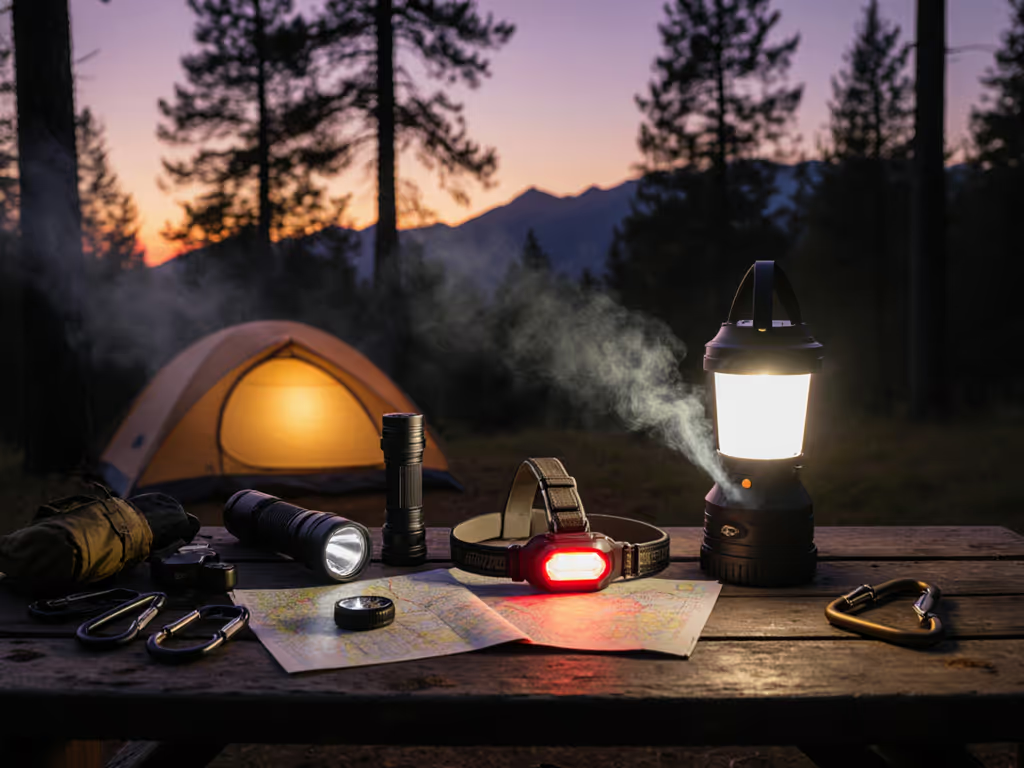
Think of your multi-day lighting system as a small network with defined jobs.
Headlamps: primary task lights
Use headlamps for:
- Walking, cooking, camp setup, emergency tasks
- Night navigation where you need reach and precise aim
For multiday use:
- Prefer single-cell 18650/21700 headlamps with efficient low modes (<=5 lm) and mid modes (20-80 lm) that run 8-20 h.
- Warm-to-neutral CCT (2700-4500 K) with decent CRI makes cooking and first aid easier on the eyes.
Lanterns: shared area and tent lights
Use lanterns for:
- Tent interior
- Table and card games
- Kitchen area when you want hands free and heads up
Choose lanterns that:
- Start very low (1-5 lm) and ramp smoothly to 50-150 lm.
- Use Li-ion (internal pack or replaceable 18650) and charge via USB-C.
- Have a hook or cord attachment to hang in a tent and a stable base for table use.
Path and marker lights
This is where small, ultra-low lights shine:
- Tiny clips or stake lights at 1-3 lm, ideally warm/red.
- Reflective tape plus one low light is often better than lots of lumens.
When each light has a narrow job, runtimes line up naturally and no single device bears the full load.
FAQ 6 - How do I manage backpacking energy vs car camping?
The tradeoffs change with distance from the trailhead.
Backpacking: grams and watt-hours matter
For a 2-3 night backpacking trip with 1-2 people:
- 1x efficient 18650 or 21700 headlamp per person.
- 1x tiny USB lantern or diffuser cap that turns a headlamp into a tent light.
- 1x 5,000-10,000 mAh power bank shared, if you also charge phones or a GPS.
Realistic outcome:
- 3 nights of conservative use (mostly <=30 lm) with 20-30% reserve.
- Under ~250-350 g total for backpacking energy management. Backpackers worried about weight can compare ultralight vs heavy camping lights.
Car camping / basecamp: systems and comfort
For a 3-5 night basecamp with 3-6 people:
- Headlamp per person (ideally standardized batteries and UI).
- 1-2 area lanterns with warm, dimmable output.
- A few low-output path markers.
- 1-2 10,000-20,000 mAh power banks or a small power box.
Weight is less critical, so you scale comfort, not lumens. The same runtime rules apply; you just have more Wh to play with.
FAQ 7 - How do I avoid glare and protect night vision on long trips?
Battery life and sky-friendliness often align.
Use warm or amber for camp
- Choose lights with 2700-4000 K modes or dedicated warm/amber LEDs.
- Warm light preserves melatonin and feels calmer in tents. For color temperature tradeoffs that affect night vision and mood, read warm white vs cool white camping lights.
Prioritize low modes and dimming range
- Your most-used mode should be 1-30 lm, not 200+.
- A good UI gives immediate access to moonlight/ultra-low and to red/amber without cycling through turbo.
Shield, don't blast
- Hang lanterns higher but dimmer, with shades or top hats to prevent direct line-of-sight glare.
- Angle headlamps down; use spot mode for distance, flood/diffused for cooking.
This is how you keep your camp's light footprint tight and compatible with dark-sky areas and astro photographers nearby.
FAQ 8 - How do I simplify cables, charging, and spares?
Multiday trips expose messy ecosystems.
Standardize whenever possible
- USB-C for charging: headlamps, lanterns, and power banks.
- 18650/21700 for replaceable cells; keep all protected cells similar capacity and label them.
Build a simple charging kit
- 1x dual- or quad-port USB charger (car adapter or wall, depending on trip).
- 1-2 short USB-C cables and one slightly longer.
- Optional: a compact Li-ion charger if your lights use bare cells instead of built-in charging.
Pre-trip routine
- Fully charge all packs and cells.
- Label cells with a marker (A/B/C) and rotate use.
- Pack a small watt-hour margin, not a second duffel of batteries.
This cleans up cable and battery chaos and makes your lighting feel like a coherent system.
FAQ 9 - Can you give concrete multi-day power plan examples?
Example 1: 3-night backpacking pair
Assumptions:
- 2x 18650 headlamps (one per person), each ~10 Wh
- Shared usage per night:
- Person A: 1 h at 40 lm (approx. 0.45 Wh) + 1 h at 10 lm (approx. 0.11 Wh)
- Person B: similar
- Tent time: 1 h at 10-20 lm using one headlamp as diffuser (approx. 0.15 Wh)
Per night total (both people): approx. 1.2-1.4 Wh
For 3 nights: approx. 4-4.5 Wh
On two 10 Wh cells, that's ~20-25% of total capacity. Even with cold or extra use doubling consumption, you have margin.
Outcome:
- No power bank required if you keep phones off or in airplane mode.
- Add a 5,000 mAh bank only if you want phone or GPS top-ups.
Example 2: 4-night car camp with kids (family of four)
Assumptions:
- 4x headlamps (2 adult Li-ion, 2 kid lights on AA NiMH)
- 1x warm lantern, internal Li-ion pack ~10-15 Wh
- 1x 10,000-20,000 mAh (37-74 Wh) power bank
Usage per night:
- Lantern: 3 h at 20-40 lm (0.5-1 Wh)
- Adult headlamps: ~1 h at 30-60 lm + 1 h at 5-10 lm each (approx. 0.8-1.0 Wh total for both)
- Kids' lights: ultra-low as comfort lights, ~0.1-0.2 Wh total
Per night total lighting: approx. 1.5-2.2 Wh
Four nights: approx. 6-9 Wh
That fits comfortably:
- Inside the lantern pack + internal headlamp cells for lighting alone.
- The big power bank is mostly for phones and backup, not primary lighting.
This is how you end a long weekend with charge left instead of chasing outlets.
Final Verdict: Build a Battery-Sane Camp Lighting Kit
For multiday trips, the 'faceoff' is not between brands; it's between over-bright chaos and a measured system.
Focus on:
- Defined roles: headlamps for tasks, small warm lantern for shared space, a few ultra-low markers.
- Efficient formats: 18650/21700 cells + a right-sized power bank if needed.
- Runtime-first modes: real, usable lows (1-30 lm) and intuitive UIs with fast access to dim/red.
- Warm, directed light: protect night vision, neighbors, and stars with controlled spill and warm CCT.
- Simple logistics: one cable type, labeled cells, and a pre-trip energy estimate with 20-30% reserve.
If you treat lighting like any other piece of core camp infrastructure (planned, measured, and shared), you end up with calm evenings, clear skies, and batteries to spare. That's kit, not gadgets.
Related Articles