When to Use Each Camping Light: Flashlight, Headlamp, Lantern
By Amara Patel • 15th Feb
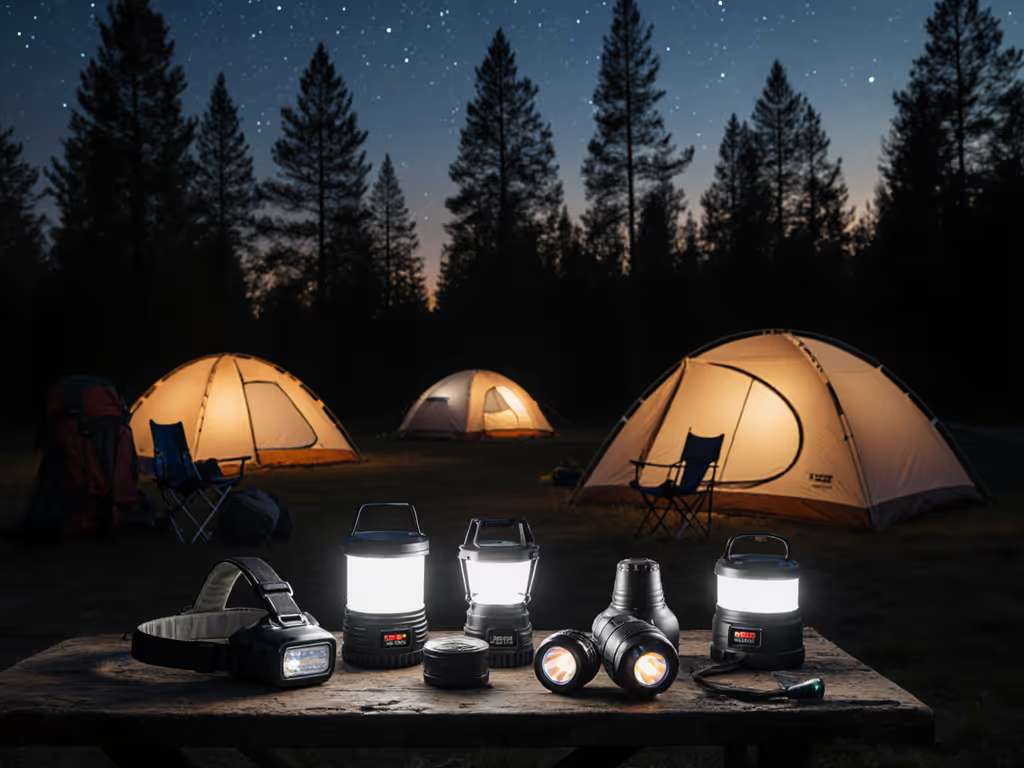
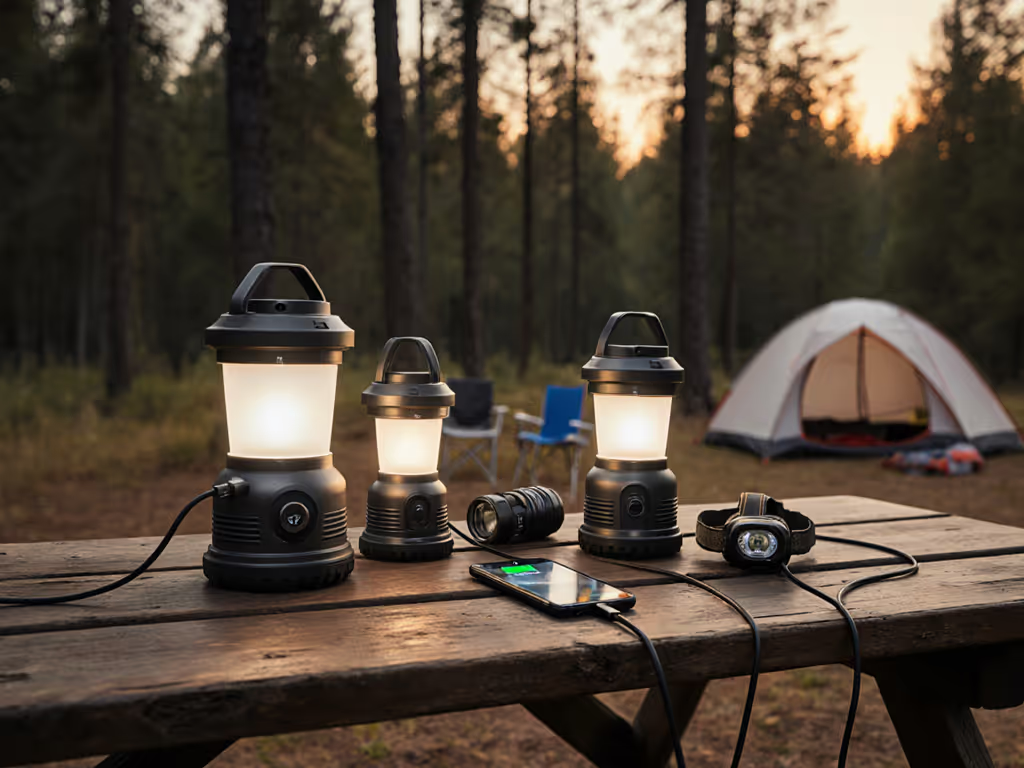
The moment the sun dips below the horizon at camp, three decisions shape your entire evening. You'll need a flashlight vs headlamp vs lantern, but the real question isn't which one is best. It's which one serves which moment, and how they work together as a coordinated system.
Most campers show up with whatever they grabbed last, only to discover halfway through the night that they've either abandoned a dead light or committed to carrying more bulk than they wanted. The cure isn't choosing one winner. It's understanding the role each type plays, then building a kit where budget is a feature (not a constraint) and every piece earns its place in your pack.
Let's walk through each lighting type, their real-world strengths, and where they fit into a thoughtful camp routine.
1. The Headlamp: Hands-Free Efficiency for Movement and Tasks
A headlamp is a hands-free light source you wear on your head, typically using an adjustable strap. It's compact and lightweight, making it ideal for activities where your hands need to be free: hiking into camp at dusk, cooking dinner, organizing your tent, or reading before sleep.
Why headlamps excel:
- Total freedom of movement: Perfect for climbing, cooking, or organizing your tent without juggling a light source.
- Compact design: They weigh very little and take up minimal space in your pack.
- Battery efficiency: While power output is lower than a flashlight, many headlamps offer long runtimes and adjustable brightness settings. Most rechargeable models last 10 to 30 hours, depending on settings and the model.
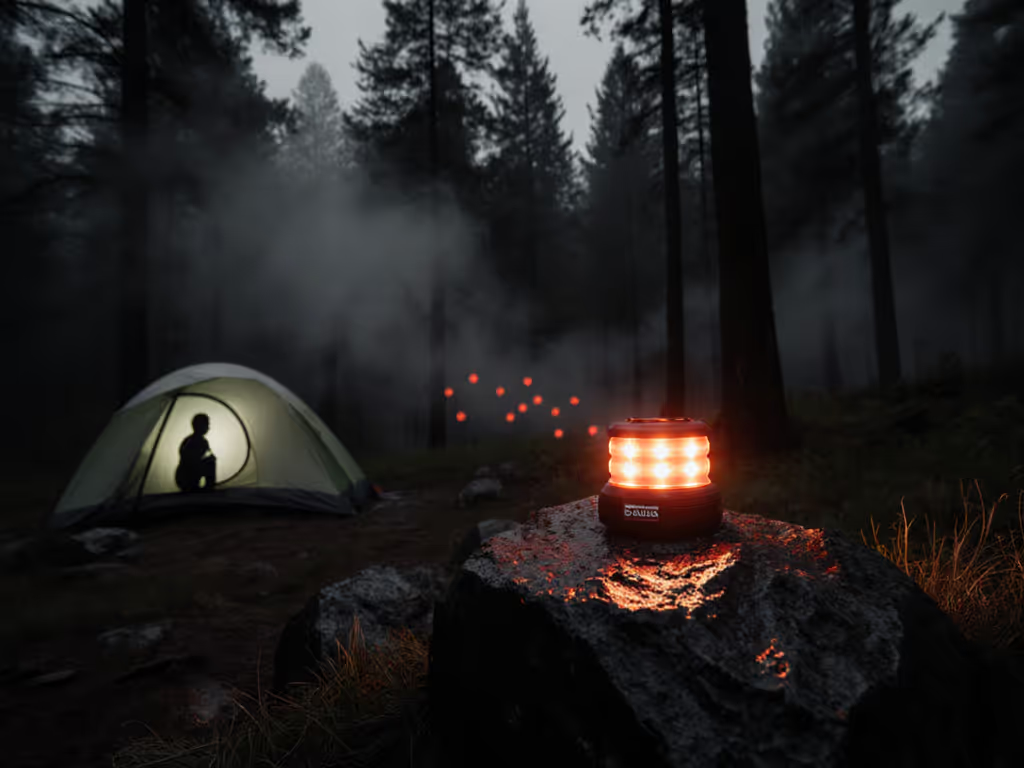
- Red light modes: Many headlamps include a red LED option, which preserves night vision, essential if you care about stargazing or letting your eyes stay adapted when moving between lit and dark areas.
Where headlamps fall short:
- Limited power: Headlamps are not typically designed for spotlighting objects at a distance. You won't scan a distant trail or check the perimeter with the intensity of a true flashlight.
- Awkward to wear with helmets or hats: Can create discomfort during prolonged use.
- Can blind others in your group: Since the beam goes wherever you look, accidentally shining it in a friend's eyes is a common rookie mistake.
Ideal for: Solo cooking, nighttime bathroom trips, sorting gear, dawn/dusk hikes, headlamp reading before sleep, and hands-on camp chores. If you hike after dark, check our best night hiking headlamps for reliable distance and efficiency.
2. The Lantern: Ambient Area Lighting for Basecamp
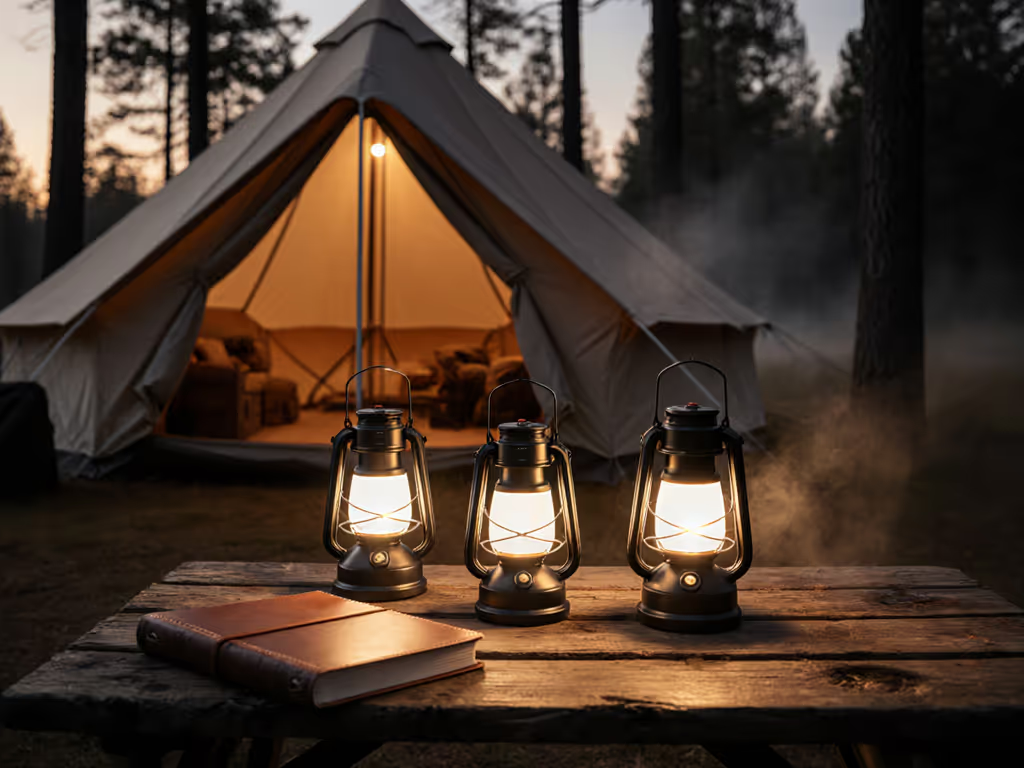
A camping LED lantern is a stationary or semi-portable light that casts ambient light across a larger area, typically 360 degrees around its position. Lanterns are bulkier than headlamps, but that size is the point: it's not meant to move with you, it's meant to transform your campsite into a functional, social space.
Why lanterns are worth the bulk:
- 360-degree light coverage: They're suitable for illuminating a larger area, such as a campsite or a room during a power outage. This is especially valuable in winter when you need to conserve your vehicle's house batteries.
- Adjustable brightness: Lanterns often come with adjustable brightness levels, making them suitable for various lighting needs. Lower settings create a cozy ambience; higher settings let you move around safely or prep food.
- Even light distribution: Unlike a flashlight's beam, a lantern spreads light evenly, reducing harsh shadows and glare.
- Passive operation: Set it on your table or hang it on a hook, and it works without you holding it.
Where lanterns have limitations:
- Bulkier to pack: They're heavier and take up more space than a headlamp.
- Shorter battery life per charge: Lanterns usually require more batteries (or more capacity from a power bank) than headlamps, and battery life can be shorter compared to headlamps.
- Less directed control: You can't easily point a lantern at a specific distant object the way you can with a flashlight.
Ideal for: Basecamp setup, dining areas, tent interiors, social hours around the fire, and overnight safety lighting if you need to move around camp at 2 a.m. For inside-the-tent picks, see our best tent lights to get even, low-glare illumination.
3. The Flashlight: Directed Power for Scanning and Spotting
A flashlight is a handheld device designed to provide a focused beam of light that reaches far and concentrates its power. Unlike a headlamp's general forward cast or a lantern's ambient spread, a flashlight puts light exactly where you aim.
Why flashlights earn their place:
- Superior brightness and throw distance: Great for lighting up large areas, spotting animals, or scanning trails. Many serious models produce 1,200+ lumens and beam distances over 1,000 feet.
- Versatile grip and aiming: You can direct the beam exactly where you need it without tilting your head and direct the beam over obstacles with a long reach.
- Tough, waterproof designs: Ideal for survival scenarios and rough weather. Most quality flashlights are rated for submersion and rough handling.
- Multi-mode operation: Strobe settings for emergencies, turbo for short bursts of light, and eco for preserving battery life.
Where flashlights create friction:
- Requires a free hand: Not ideal if you're carrying gear or using tools.
- Bulkier to carry: Larger models may not suit minimalist packers.
- Easier to misplace or drop: Especially around camp, you might set it down and forget where you placed it, or it could fall out of your pocket.
Ideal for: Nighttime perimeter checks, spotting distant landmarks or animals, emergency signaling, detailed repair work requiring intense light, and group scenarios where one person scans while others work hands-free.
4. The Integrated Kit: Why You Need All Three (Not Just One)
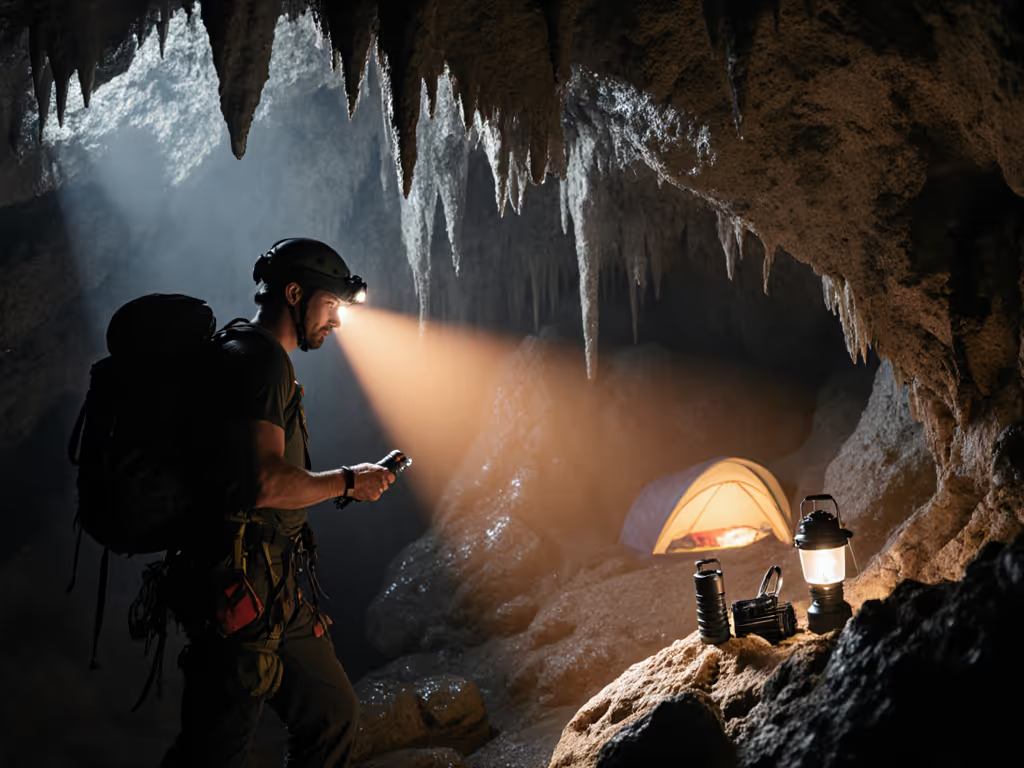
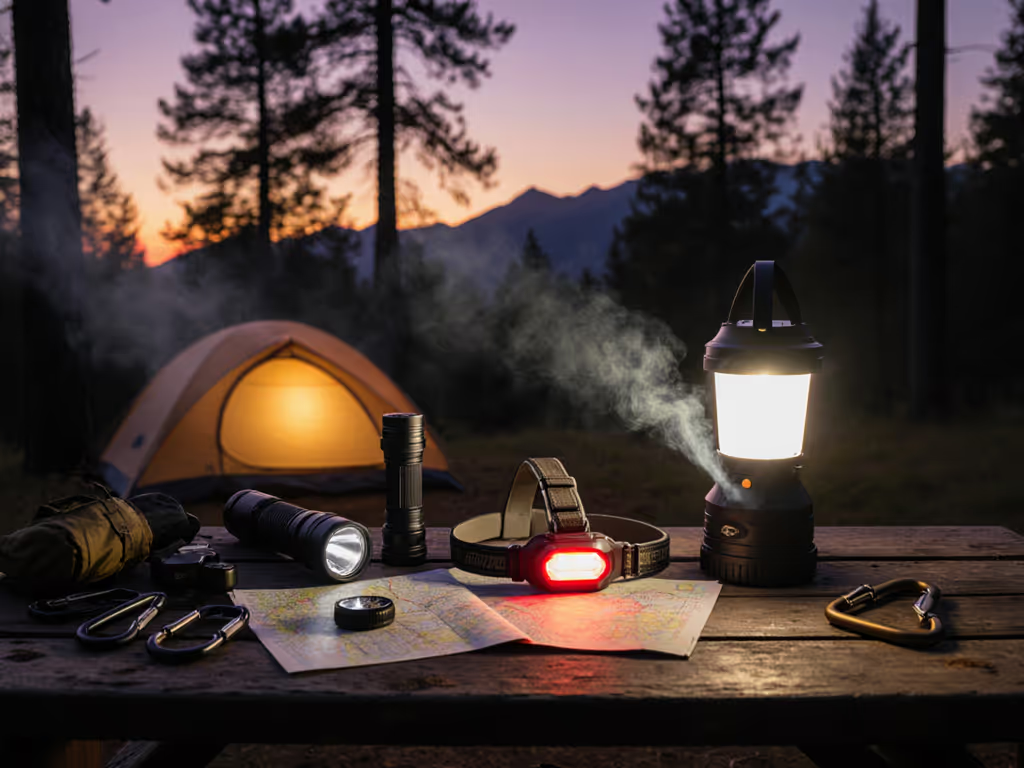
Here's the truth that changes everything: the best solution for most campers is to bring all three types. Each tool serves a different purpose, and having all three gives you full lighting flexibility. This isn't about buying more, it's about buying smarter.
Think about a typical evening at camp:
- 5:30 p.m.: You arrive at dusk and hike the last mile to your site. Your headlamp frees your hands to navigate the trail and set up.
- 6:30 p.m.: You're cooking dinner. Your headlamp stays on, positioned to light your work area without blinding anyone sitting nearby.
- 7:30 p.m.: Dinner's ready. You switch to a low-brightness lantern on the table, creating a calm social space where everyone can see each other without harsh glare.
- 9 p.m.: Your group relaxes around the fire. The lantern dims further, and most people switch their headlamps to red mode to preserve night vision and let eyes adjust to starlight.
- 11 p.m.: Someone hears a noise at the perimeter. A flashlight with reach lets one person investigate without waking sleepers or flooding the whole camp with light.
- 2 a.m.: A child needs the bathroom. A low headlamp or small pathway light guides them safely without waking the rest of the group.
Each light does something the others can't. None is redundant. Preparedness equals clarity plus restraint: you're not overpacking, you're matching tools to moments.
5. Power Planning: The Hidden Layer
Having the right lights means nothing if they're dead by night two. This is where most kits fail, and where intentional design separates organized campers from frustrated ones.
Start with runtime honesty. Headlamps with rechargeable 18650 or 21700 cells can run 10-30 hours depending on brightness and model. Lanterns vary widely but often consume power faster due to larger outputs. Flashlights on eco mode might run 40+ hours; turbo mode drains in minutes.
Build for your trip length. A weekend getaway (two nights) needs different power planning than a week-long expedition. For moderate use across a two-night trip:
- One quality headlamp: 1-2 full charges (most trips use only 5-8 hours of light per night).
- One lantern running 2-4 hours per night at medium brightness: 1-2 charges.
- A flashlight on occasional use: minimal drain.
Standardize your cells. For a deep dive on chemistries and long-term costs, see our rechargeable vs disposable battery guide. Don't mix AAA, 18650, and proprietary batteries. Pick a standard (18650 or 21700 rechargeable) and build your kit around it. You'll buy fewer chargers, swap cells between devices, and know exactly what you're carrying. This is budget as a feature: fewer power bricks, shared capacity, and zero waste from mismatched disposables.
Add a small USB-C power bank. A 10,000 mAh bank (roughly the size of a deck of cards) charges most headlamps 2-3 times and fits any pack. Many modern lights charge via USB-C, a single cable for everything.
6. Beam Quality and Night-Friendly Design
Not all lumens are created equal. Get the basics in our Lumens Camping Guide, with practical ranges for common camp tasks. A cold-white 1,000-lumen lantern feels harsher and drains batteries faster than a warm-white 600-lumen lantern. When you're thinking about spend less, waste less, and light with intention and care, beam quality matters.
Warm tint (2,700K-3,000K) is gentler: It preserves night vision better, looks more pleasant for socializing, and feels less industrial at camp.
Red or amber modes are non-negotiable: A red-light feature on your headlamp costs almost nothing but preserves night vision instantly, allowing you and others to move between lit and dark zones without that blinding-then-adjusting cycle.
Diffusers and shades are underrated: A simple frosted diffuser over a headlamp or a tent-style diffuser on a lantern eliminates harsh spots and makes light feel softer. Thrifted or DIY options (thin fabric, vellum, even a paper cup) work beautifully and cost pennies.
7. The Complete Loadout: A Practical Example
Here's what a realistic, well-balanced kit looks like for a group of four, two-night trip:
- Two quality headlamps (500-1,000 lumens, rechargeable, red mode): one primary, one backup.
- One medium lantern (200-400 lumens, dimmable, warm-white): hung on a hook or tripod for basecamp.
- One compact handheld flashlight (800-1,200 lumens, rechargeable): for perimeter checks or group activities.
- One shared 10,000 mAh USB-C power bank: charged before the trip, enough for top-ups during the stay.
- Four AA or 18650 cells (if headlamps use them): stored in a labeled case, one spare set.
- One USB-C cable and one micro diffuser pouch: packed with the lights.
Total weight: under 2 pounds (including batteries and cables).
Total cost (quality tier): $80-150 for the complete setup, amortized over 3-5 years of trips.
Result: No one fumbles in the dark. No mid-trip power panic. No blinding anyone. No harsh glare disrupting sleep. The whole group operates smoothly, and light feels like a resource you've planned for, not an afterthought.
Next Steps: Build Your Personal Loadout
Start by auditing your next trip's schedule: when do you need hands-free light? When do you need area lighting? When will you scout or spot? Write those moments down.
Then choose one light type for each moment, not by brand or hype, but by function. If you don't have a lantern, borrow or test one first. If your headlamp battery dies after five hours of high brightness, upgrade the cell or the head unit before your next trip.
Finally, label your batteries with a marker, charge everything fully before you leave, and commit to one cable standard. Document your loadout in a checklist (a simple Google Doc works) so packing becomes automatic and you never again arrive after dark without confidence.
Your camp should feel organized the moment the sun sets. The right lights, all of them working as a system, make that possible. Spend less, waste less, light with intention and care.
Related Articles