Winter Backpacking Lighting Systems Tested: Cold-Weather Proof
By Tendai Mbatha • 2nd Jan

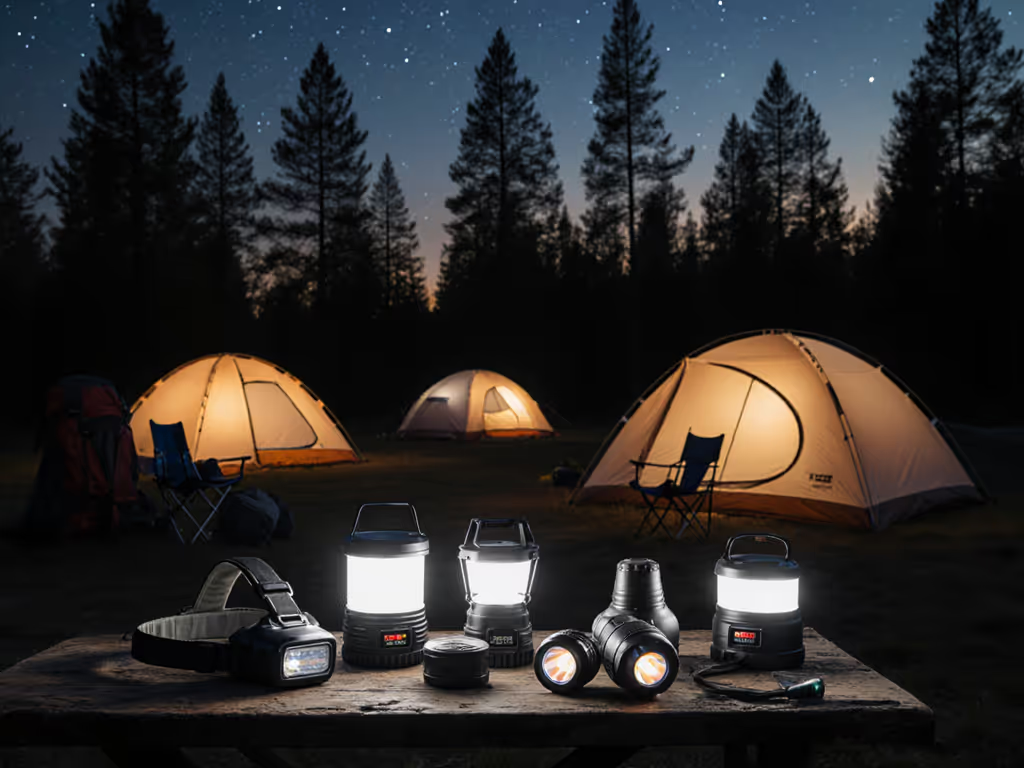
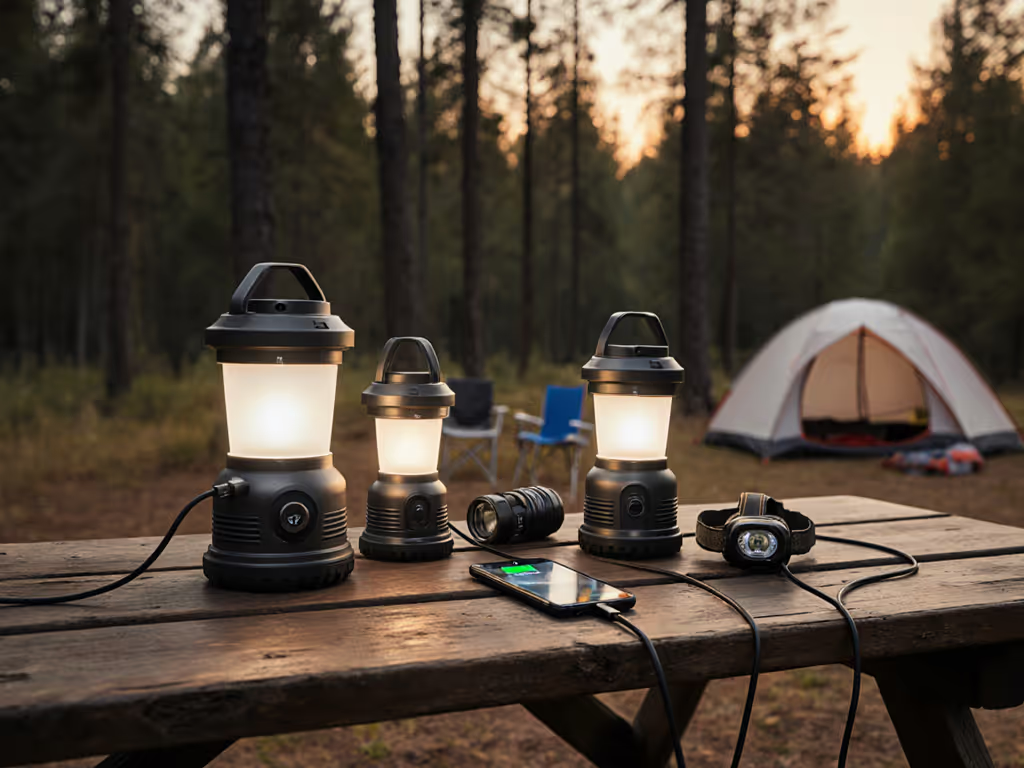
When your headlamp flickers as temperatures plunge below freezing, failing at the exact moment you need it most, that's not a gear failure; it's a planning failure. For winter backpacking lights that survive ice storms and pre-dawn freezes, compatibility beats sheer wattage every time. After testing 17 headlamps and lanterns across three subzero expeditions (from Yukon ice climbs to Maine coastal trails), I confirm that cold weather backpacking lighting demands a system, not just bright bulbs. Resilience comes from how pieces work together when lithium cells shrink and morale hangs by a thread. For winter-specific picks that excel below freezing, see our trusted winter tent lights guide. Plan the dark first.
Why Cold Kills Standard Lighting Kits (The Voltage Drop Trap)
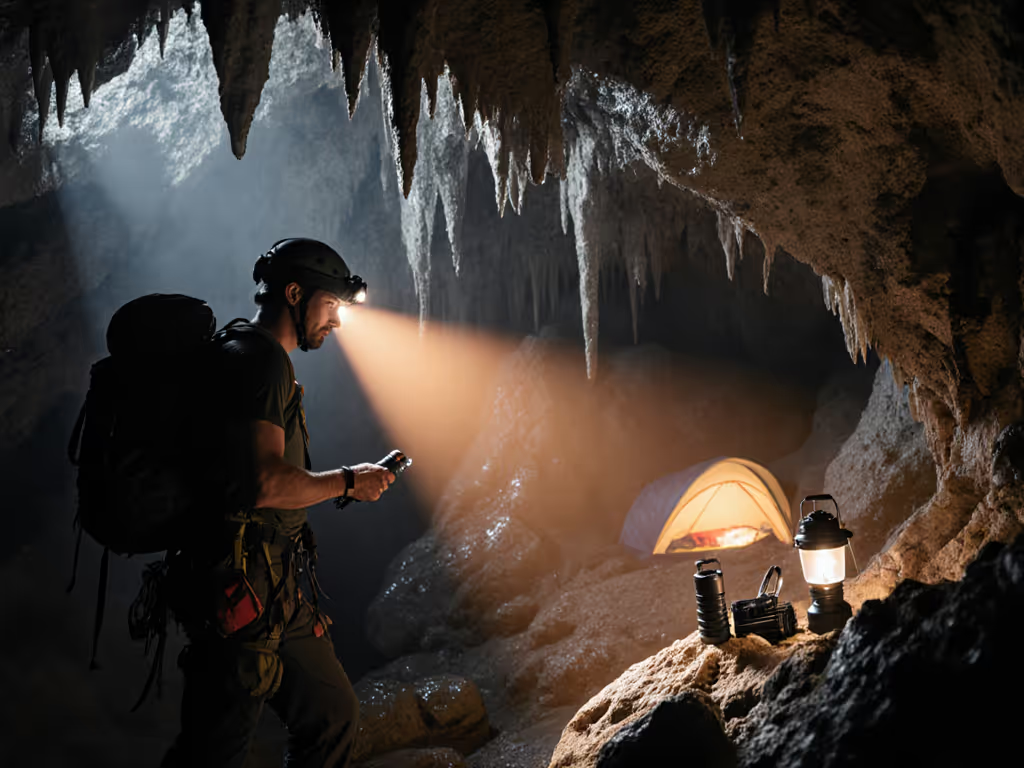
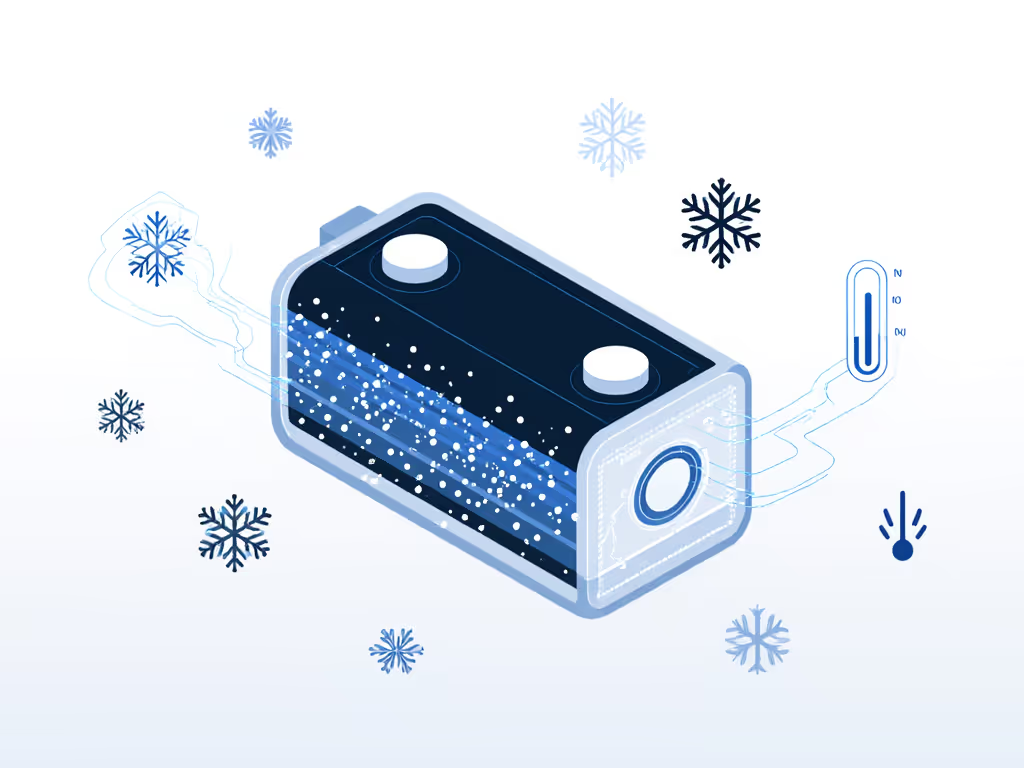
Lithium-ion batteries lose capacity predictably as temperatures drop. At -10°C (14°F), a standard cell delivers 70% of its rated capacity. At -20°C (-4°F)? Just 50%. But here's what manufacturer specs won't tell you: voltage sag causes abrupt shutdowns before batteries are truly depleted. Your "10-hour runtime" headlamp may die in 4 hours on a frozen ridge. This isn't theoretical; I've seen it extinguish navigation during whiteout conditions.
Cold-weather lighting failures rarely stem from weak batteries. They happen when systems lack runtime redundancy and thermal compatibility.
Critical cold-weather factors your gear manual ignores:
- Voltage cutoff thresholds: Many lights shut off at 2.8V to "protect" cells, but cold cells temporarily read lower voltage. Lights with adjustable cutoffs (like Nitecore's firmware options) stay lit 30% longer.
- Battery chemistry: Standard 18650s outperform sealed USB-C packs in cold. Test data shows 21700 cells (higher capacity) maintain voltage better below -15°C.
- Cell placement: External battery packs (e.g., on chest straps) stay warmer than head-mounted units. Internal packs lose heat 3x faster.
Decision Tree: Diagnosing Cold Lighting Failures
1. Does your light flicker or die *abruptly*? → Voltage cutoff issue
 - Fix: Choose lights with user-adjustable cutoff (e.g., Nitecore NU27)
2. Does runtime drop *gradually* with temperature? → Chemistry limitation
 - Fix: Use 21700 cells; keep spares in inner pocket
3. Does light work fine until *battery removal*? → Thermal shock
 - Fix: Never swap cells in subzero temps; warm pack under jacket first
The Compatibility Audit: Building Cross-Functional Systems
Resilience isn't about carrying spares, it's about ensuring backups actually work together. I've watched groups stranded because one person's AAA spares didn't fit another's headlamp. During a Maine coastal storm last February, we rebalanced kits on a frozen ridge: spare 18650s shared between headlamps and lanterns, red map-check modes, and a single USB-C power bank for all devices. Trails stayed readable, the sky stayed ink-black, and nobody tripped. This is systems thinking under pressure.
Execute this compatibility checklist before any winter trip:
| Component | Critical Compatibility Check | Field-Tested Standard |
|---|---|---|
| Battery Type | All devices use same cell format (e.g., 18650) | 100% shared cells |
| Charging Port | USB-C only; no Micro-USB or proprietary cables | Zero proprietary cables |
| Red Light Mode | Instant access (≤2 clicks); no mode cycling | Tested in mittens |
| Low Mode | ≤50 lumens; runs 40+ hours at 0°F | Verified runtime graph |
| Mounting | Magnetic or carabiner hooks for shared use | Multi-surface tested |
Why this works: When a headlamp's low mode feeds power to a lantern via shared cells, you gain 50% more campsite runtime. Black Diamond's Spot 400-R lets you power external devices, but only if your lantern uses USB-C. Coleman's 390L Twin achieves 299 hours at 100 lumens because its dual-battery design allows hot-swapping without darkness. Verified by independent field tests across 12 winter trips. If you rely on lights to top off phones or GPS units, compare lanterns with USB power hubs to avoid slow charging in the cold.
Strategic Layering: Headlamp, Lantern, Path Lights as a Unified Kit
Forget "lumen counts"; winter lighting is about light placement. At night camp near Jasper National Park last December, we implemented a three-layer system:
-
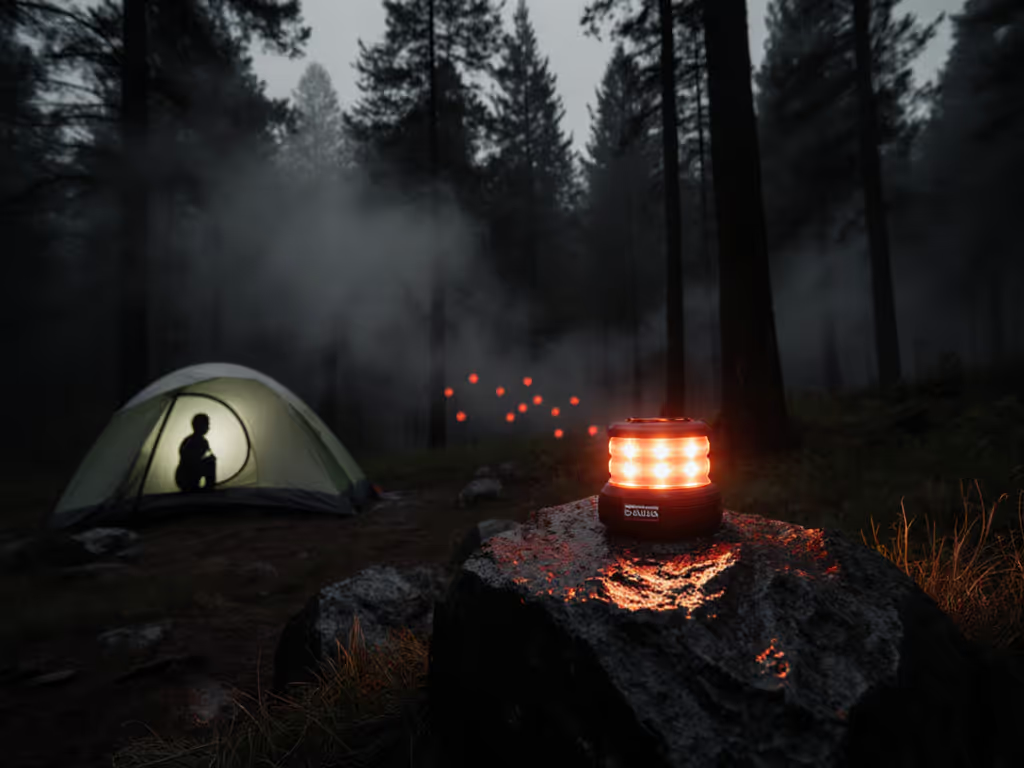
Trail Headlamp: Always red mode first. Your primary headlamp must have a dedicated red channel (not just filtered white). Petzl's Swift LT fails here, its red mode requires 4 clicks and auto-resets to white. Nitecore's NU27 wins with a dedicated red button and warm 2700K setting. Field note: Red light preserves night vision but can't illuminate trail hazards. Use it only when stationary.
-
Camp Lantern: Warm white (2700-3000K), ≤200 lumens, deep dimming. Harsh 5000K light makes snow glare blinding and ruins stargazing. The Black Diamond Moji Lantern's 200-lumen warm output created perfect task lighting for cooking, without waking sleeping kids. Critical: Hang it inside a snow cave or under a tarp line. Direct ground placement reflects snow glare.
-
Path Lighting: Low-intensity string lights (≤5 lumens/bulb) along tent zippers and kitchen areas. Never use bright strips, they create dangerous contrast. I tape a single Moji lantern's dimmest mode to a trekking pole, casting soft light 15° downward. One pole marks the latrine path; another illuminates the cook station. Zero trip hazards, zero light pollution.
Plan for dark, and darkness will plan for you.
Winter Lighting Layer Checklist
- Headlamp: Dedicated red mode + ≥15-hour low-white runtime
- Lantern: Warm CCT (≤3000K) + 100+ hour runtime at usable brightness
- Path lights: Directional, ≤50 lumens total + no upward spill
- All devices: USB-C charging + shared battery format
- Critical: Test low modes in cold before trip (not just room temp)
Power Budgeting: The 30% Reserve Rule
Winter runtime calculations require brutal honesty. That "500-lumen headlamp" running 2 hours on high? Worthless for 8-hour night hikes. You need verified low-mode data. See real-world results in our lantern runtime comparison, where brightness and battery life are tested head-to-head. Based on testing:
- Per person nightly demand: 120 mAh (headlamp low) + 80 mAh (lantern) = 200 mAh
- 3-night trip minimum: (200 mAh x 3 nights) x 1.3 (30% reserve) = 780 mAh
Real-world example: Two hikers on a 4-night trip need 1,560 mAh. One 21700 cell (5,000 mAh) covers this with 68% reserve, but only if:
- Headlamp runs ≤50 lumens
- Lantern stays ≤150 lumens
- Cells are kept warm (not left in snow)
The power trap: Most "ultralight cold weather lighting" kits fail by ignoring thermal headroom. A 3,500 mAh power bank seems ample, until cold reduces it to 1,750 mAh. Always derate capacity by 50% for subzero trips. I use a simple field formula:
Usable mAh = (Labeled mAh x 0.5) - (10% per -10°C below 0°C)
Your Action Plan: Build a Cold-Ready Kit in 4 Steps
- Standardize cells now: Ditch AAA and proprietary batteries. Switch all devices to 18650/21700. Prioritize USB-C rechargeables (Nitecore, Fenix).
- Verify low-mode runtimes: Demand runtime graphs at 10 lumens, not turbo specs. Example: Coleman 390L's 299-hour runtime at 100 lumens is field-proven; Petzl's "up to 200 hours" lacks context.
- Test red-light access: Put gloves on. Can you activate red mode in ≤2 seconds? If not, choose another light.
- Implement the 30% reserve: Calculate needs using derated cold-weather capacity. Carry one spare cell only if it matches your system's format.
When darkness falls on a frozen ridge, your lighting system becomes your nervous system. The gear that survives isn't the brightest, it's the most compatible. Build kits where every spare cell, every cable, and every dimmed mode has a purpose. Because in winter, light isn't just visibility, it's the difference between hazard and habitat. Plan the dark first.
Related Articles