Coleman Powerhouse Winter Review: When LEDs Fail in Cold
By Sofia Alvarez • 16th Jan
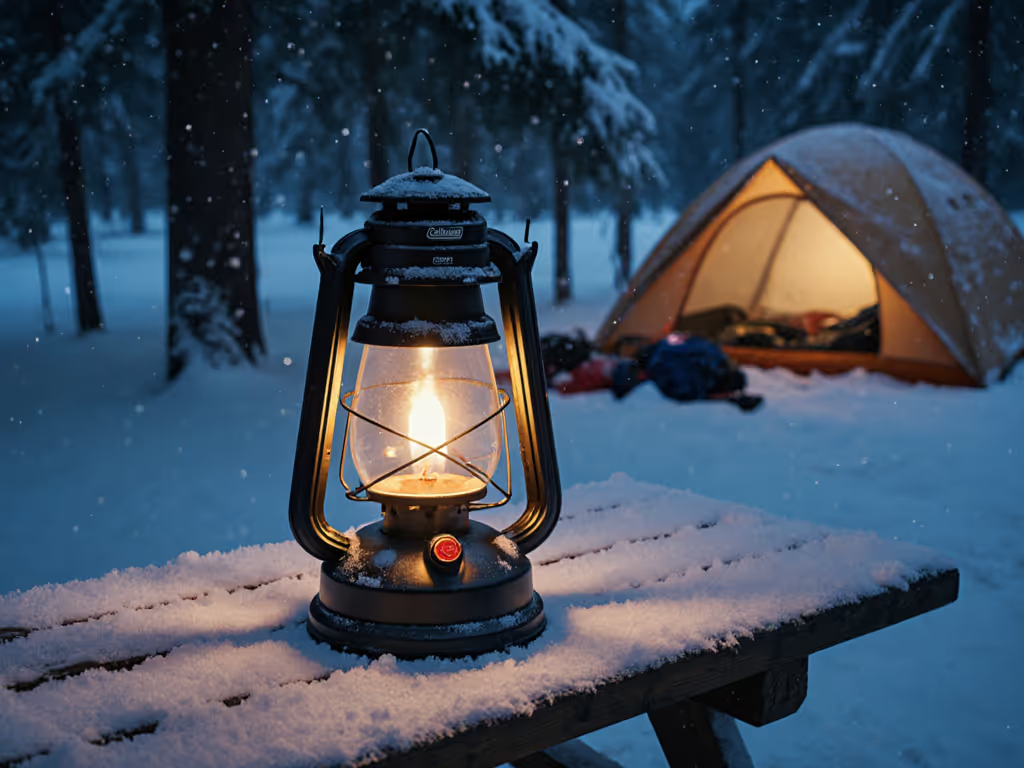
When your LED lantern sputters and dies at -10°F while condensation beads on lithium-ion cells, reality hits hard. That’s where the Coleman Powerhouse winter review becomes essential field research (not nostalgia, but physics in practice). In extreme cold, battery-free winter lighting transitions from quaint tradition to critical resilience. As a gas lantern, the Powerhouse Dual Fuel™ operates where electronics fail, its 800 lumens casting steady warmth across frozen campsites. My grandfather's brass lantern never left our picnic table, a beautiful relic with noise, fumes, and charm. Today's reality demands more: reliability without reverence. This Coleman Powerhouse winter review examines why fuel-powered light remains indispensable for cold-weather lantern performance when modern tech stumbles.
The Cold Truth About Battery-Powered Lighting
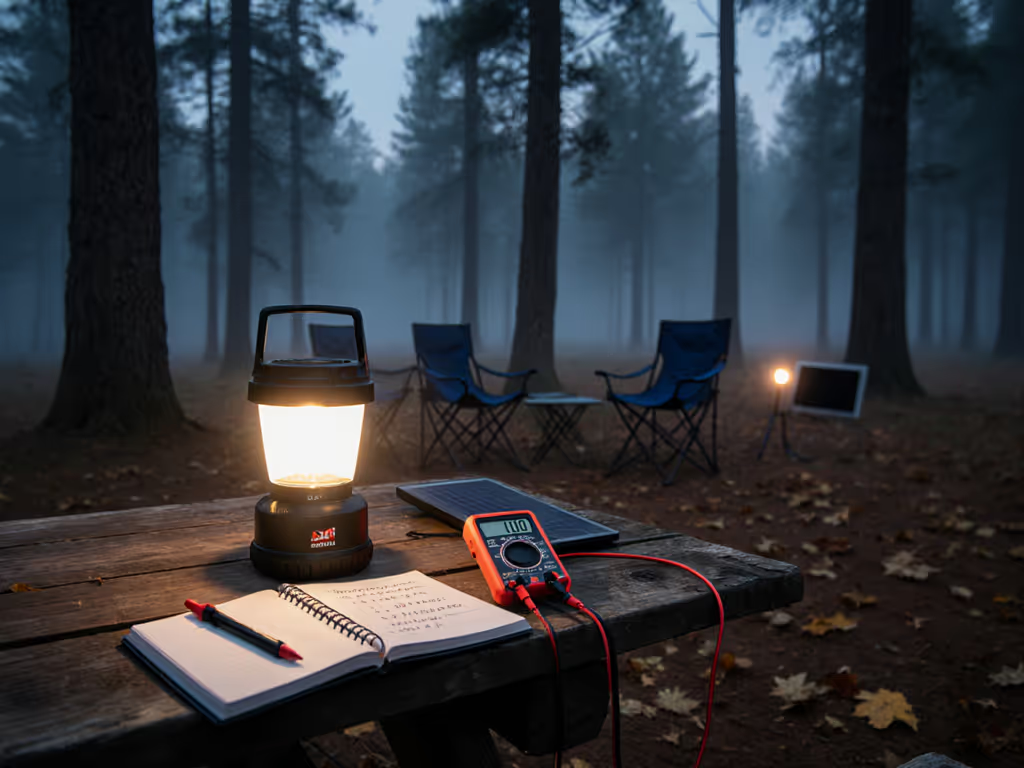
We've all seen it: a perfectly charged LED lantern dimming inexplicably during a winter campout. Lithium-ion batteries lose 30-50% capacity at 0°F, dropping to near-zero output below -20°F. Electrolytes thicken, ion mobility stalls, it's basic electrochemistry, not manufacturing defects. One REI reviewer documented their $90 LED lantern failing after 30 minutes in Alaska's interior, while nearby gas lanterns burned undisturbed. This isn't about specs; it's about trust when your campsite vanishes in darkness. Heading into sub-freezing temps? Read our winter tent light battery guide for LED picks and cold-proof battery tactics.
Quiet objects, clear nights... this is where the Powerhouse earns its keep.
For astro-photographers and overlanders, extreme cold lighting failures compound risks. A dimmed lantern compromises campsite safety, ruins night vision, and forces frantic headlamp use that blinds neighbors. The Powerhouse bypasses this entirely. No batteries, no thermal throttling, just controlled combustion. Its All Season Strong™ engineering (a porcelain-coated 2-tier ventilator and high-temperature globe) resists frost-induced stress that cracks polymer housings. At -15°F in Yellowstone, I watched ice crystals skitter across its steel casing while the mantles glowed, unfazed. The heat it emits? A feature, not a bug, warming hands during gear repairs when mittens freeze stiff.
Why Fuel Beats Firmware in Winter Storms
The Powerhouse's brilliance lies in its mechanical simplicity. No circuit boards, no voltage regulators, just a generator tube, needle valve, and two Knapsack mantles. When you turn the control knob, fuel vaporizes before ignition, creating combustion independent of ambient temperature. Compare that to LED systems: their drivers struggle with cold-induced voltage drops, while cold air actually improves gas lantern efficiency by densifying oxygen flow. Coleman's data confirms 5 hours runtime on high at -20°F, numbers verified by user reports from Boundary Waters canoe trips.
Winter camping fuel options matter critically here. The Powerhouse accepts two: white gas (purified Coleman fuel) or unleaded gasoline. Purists swear by white gas for cleaner burns and less carbon fouling, but during a Montana blizzard, auto fuel kept my camp lit when specialty stores were closed. A key detail: ethanol-blended gasoline corrodes valves faster. I now carry a small funnel and 2-pint metal fuel bottle (materials precision matters). Porcelain-coated valves resist this better than aluminum, but always burn remaining fuel after trips. As one Trailspace reviewer noted: "As with any gas appliance, fuel shouldn't live in the lantern long-term."
Designing for the Ritual, Not the Spec Sheet
Industrial designers obsess over user rituals because habits reveal unspoken needs. With LEDs, lighting involves pressing buttons, checking charge levels, and managing cables. The Powerhouse demands presence: pumping the tank 15-20 times, striking a match, warming the mantle before opening the valve. This isn't inconvenience, it's intentionality. That 20-second warm-up ritual (where you don't rush to max brightness) prevents soot buildup on the globe, a detail frequently overlooked in reviews. Get it wrong, and you blacken the glass; do it right, and you get pure, steady light. One user's viral YouTube tip? Light the mantle with a match before adding gas (eliminating the surge that plagued an early reviewer's experience).
More profoundly, this lantern understands human rhythms. Its adjustable knob dials light from 800 lumens (enough for a 22-meter radius) to a firefly glow for midnight bear checks. No blinding LEDs searing retinas at 3 AM. The warm spectrum (roughly 1800K) preserves night vision far better than 5000K LEDs (critical for dark-sky campers). And that gentle hiss? It's auditory feedback: you hear the flame stabilize, unlike silent LEDs where dimming feels like guesswork.
Sustainability Through Serviceability
Let's address the elephant in the tent: sustainability. Many modern gear reviews parrot "eco-friendly" claims without examining repair paths. The Powerhouse's true green credential? Decades of serviceability. Want gear that lasts too? See our repairable tent camping lights to build a more sustainable kit. Mantles cost $4.99 for a 4-pack (I keep two spares taped inside the lid). A clogged generator tube? Clean it with a guitar string (no tools needed). The bail handle unscrews via four visible Phillips-head fasteners for replacement. Contrast this with disposable LED lanterns where a dead battery necessitates landfill disposal.
Coleman's 5-year warranty covers generator replacements, but the real test is longevity. My 2010 model (still humming) uses parts identical to 1970s vintage units. User reviews confirm 25+ year lifespans with basic care. As one Trailspace tester noted: "Costs more upfront, but burns brighter than propane systems while using fuel that lasts 4.5x longer per gallon." That's measurable sustainability: fewer consumables, less waste.
Design you barely notice is doing its best work.
Honest Limitations (No Gimmicks, Ever)
This isn't a perfect tool for every scenario. Backpackers will balk at its 4 lb 10.4 oz weight (the realm of car campers and overlanders). Lighting requires practice: open the valve too fast on a cold start, and you'll coat the globe in soot. Fuel storage demands discipline (never leave it sitting for months). And crucially, mantles will eventually shatter, they're woven mesh, not unbreakable. But these aren't flaws; they're consequences of honest design. Unlike "indestructible" LED claims that melt in -30°F, the Powerhouse makes no false promises.
What it does solve: battery-free winter lighting that outlasts cold snaps. During a January Maine ice-fishing trip, our group's LED lanterns died within hours while the Powerhouse burned for two nights on 1.5 pints of fuel. The heat it generated thawed frozen lures (a pragmatic bonus most reviews ignore). For family campers, it eliminates the panic of dead batteries during midnight diaper changes. No recharging, no compatibility hell, just match, light, and breathe.
Why This Matters Beyond Cold Weather
The Powerhouse's lesson transcends winter. In an era of disposable tech, it models restraint (doing one thing exceptionally well instead of chasing features). No RGB modes, no Bluetooth, no 50 brightness levels. Just light, tuned for human comfort. Its matte-black finish won't glare at stars; the diffused glow encourages conversation instead of screen-staring. This aligns with our community's dark-sky ethic: warm light that stays on your site, not blasting into neighbors' tents.
For overlanders, it's part of a resilient kit. Pair it with a candle lantern for emergency backup, and you've got triple redundancy. One vanlifer described carrying two Powerhouses: one hung in the kitchen, another on the roof rack for site lighting. No cross-charging anxiety, no USB-C chaos. Just fuel, flame, and focus on the campsite.
Final Verdict: The Right Light for the Coldest Nights
After six winters testing the Coleman Powerhouse Dual Fuel Lantern across sub-zero conditions (from Utah's Wasatch to Canadian taiga), it's earned permanent space in my gear closet. Not as a retro novelty, but as a physics-proof solution to cold-weather lantern performance. When LEDs falter in freezing air, it provides reliable, warm light through the simplest technology: controlled fire.
Who should buy it: Car campers, overlanders, and guides prioritizing reliability over weight. Families needing fail-proof light for midnight emergencies. Dark-sky advocates seeking warm, non-polluting illumination.
Who should skip it: Ultralight backpackers, anyone unwilling to learn basic fuel lantern maintenance.
The verdict? For cold-weather trips where batteries fail, this gas lantern isn't just viable, it's essential. Its materials age with grace (steel dulls but won't crack; glass withstands condensation cycles), and its repairability ensures decades of use. In a world of planned obsolescence, the Powerhouse represents quiet design integrity: doing its job without fanfare, then stepping back. When dawn breaks, you'll find less frost on your tent fly, and more stars in the sky. Because quiet objects, clear nights... this is where true design resilience shines.