Solo Backpacker Lighting: Fail-Safe Systems Tested
By Sofia Alvarez • 18th Jan
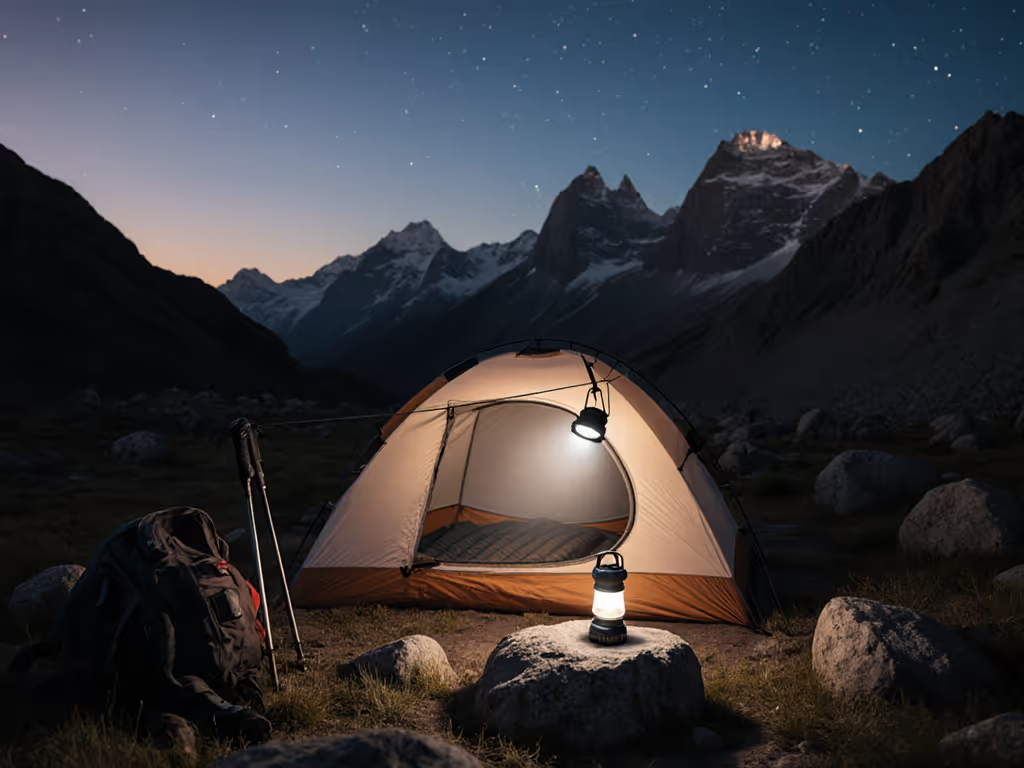
When your camp is the only one for miles, solo backpacker lighting becomes more than utility (it is the threshold between anxiety and calm). I've learned this kneeling in the predawn chill of a Montana shoulder season, where camp tent lighting must pull double duty: illuminating gear repairs while preserving the night sky. The right glow isn't measured in lumens alone, but in how it shapes solitude into sanctuary.
The Philosophy of Restraint in Low Light
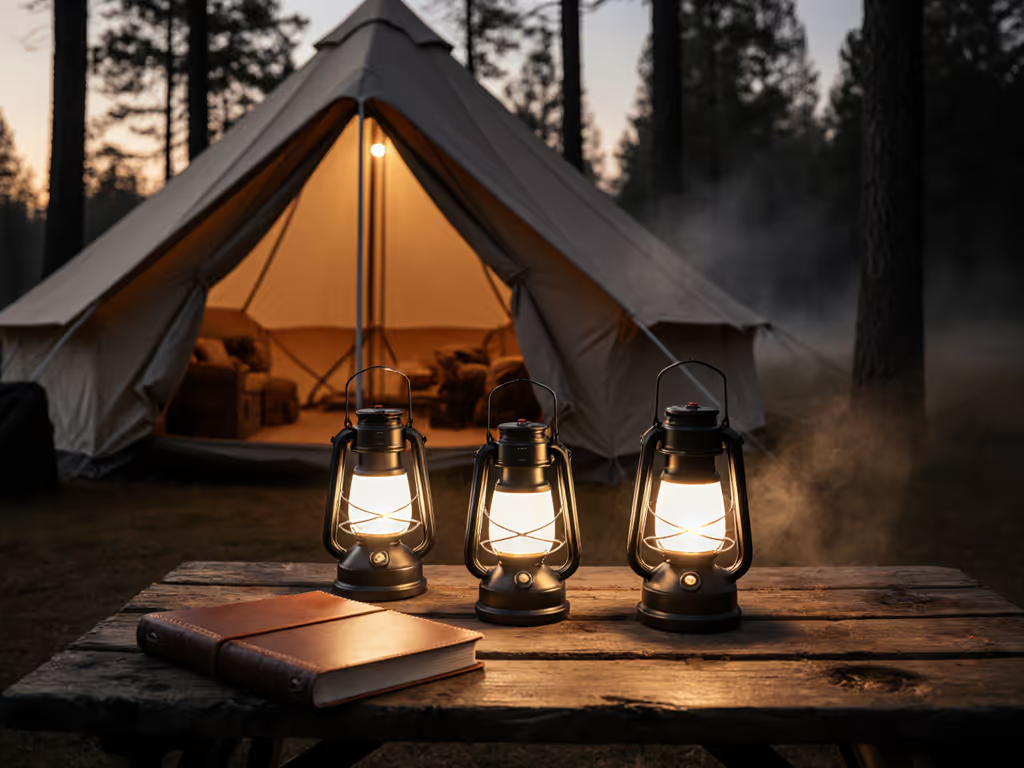
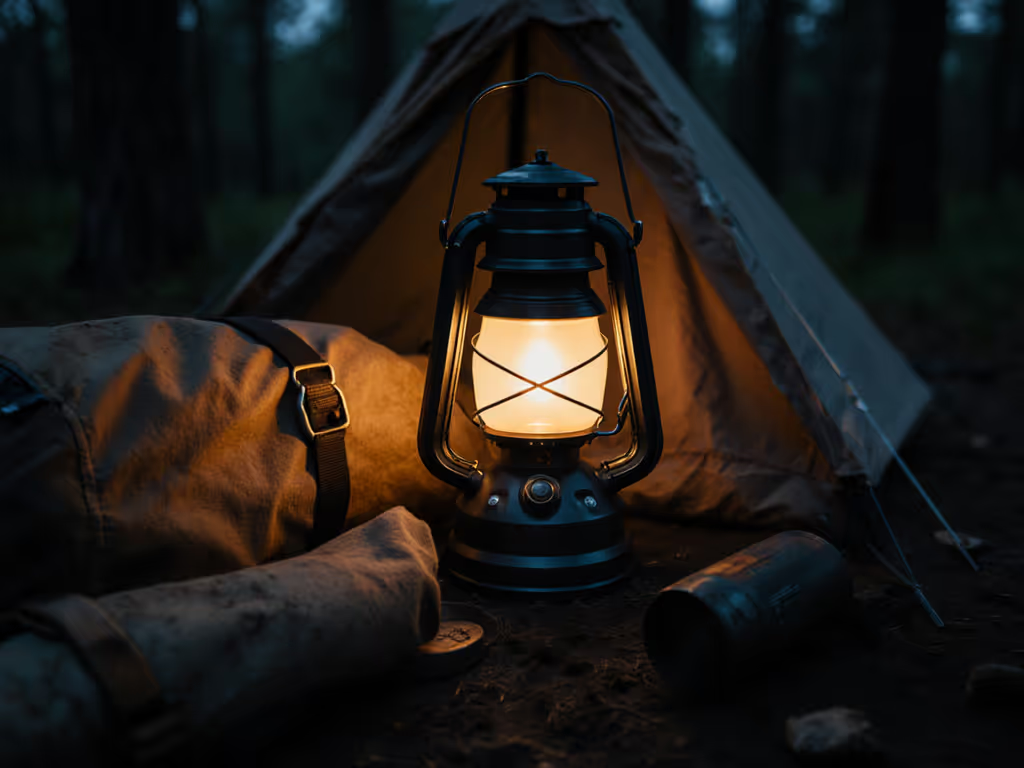
My grandfather's brass hurricane lantern hung from our picnic table for decades (a flickering relic with a persistent wick sputter). I chased that mood with modern tools: warm, high-CRI LEDs, matte diffusers, and minimal controls. Now, when I unclip a collapsible lantern inside a stuffy tent, the brass memory surfaces. That warm halo makes the trees stay night while the table feels human again. Design serves the moment, not the spec sheet.
Good lighting for solo trips isn't about overpowering darkness. It's the art of restraint in service of people and place. Over-bright COB arrays might dazzle reviewers, but they annihilate night vision and betray our dark-sky ethic. I've seen too many solo backpackers return to camp with pupils still contracted from their headlamp's turbo mode, stumbling over tent stakes they should've seen. True expedition lighting whispers rather than shouts.
Design you barely notice is doing its best work.
Why Solo Lighting Demands Fail-Safe Systems
Backpackers face unique lighting vulnerabilities. Unlike groups that share resources, you're the sole system administrator. One dead battery isn't an inconvenience (it is a potential safety event). I've tested systems through three seasons of shoulder-season trips where cold sapped battery capacity by 30% overnight. Here's what matters: For a step-by-step framework, see our layered emergency lighting system.
Three Non-Negotiables for Solo Lighting
- Color fidelity over brightness: A warm 2700K LED with 90+ CRI reveals trail hazards without shocking your eyes. Learn how warm vs cool white affects night vision and mood. Test by reading a topo map (colors should stay true, not drown in blue spikes).
- Physical redundancy: Two independent power sources minimum. Not "dual USB ports," but separate chemistries (e.g., headlamp with CR123A backup + USB-rechargeable lantern).
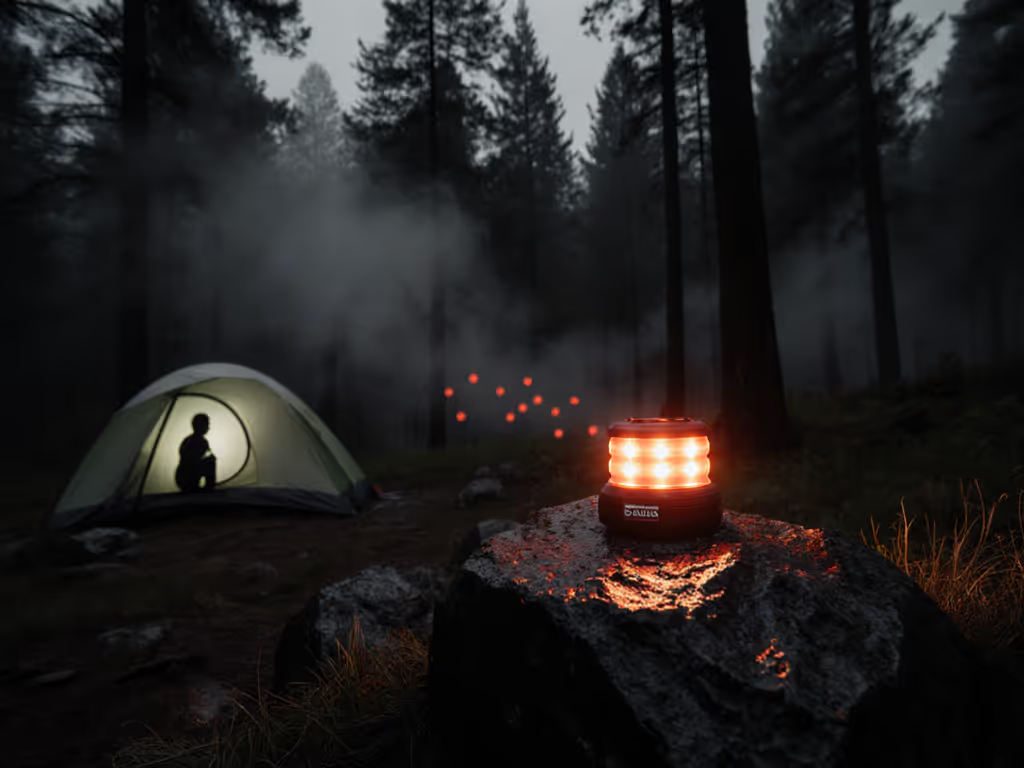
- Tactile interfaces: Glove-friendly dials and detented switches. When your fingers are numb at 40°F, you shouldn't need to swipe a touchscreen to activate red mode.
The worst moment I've witnessed? A hiker scrambling for a dying headlamp near a river crossing at dusk. No backup light meant no safe route assessment. His "ultralight" setup lacked even AAA spares (just one lithium-ion pack with 20% charge left). Redundancy isn't weight; it's margin for error.
Building Your Fail-Safe Lighting Ecosystem
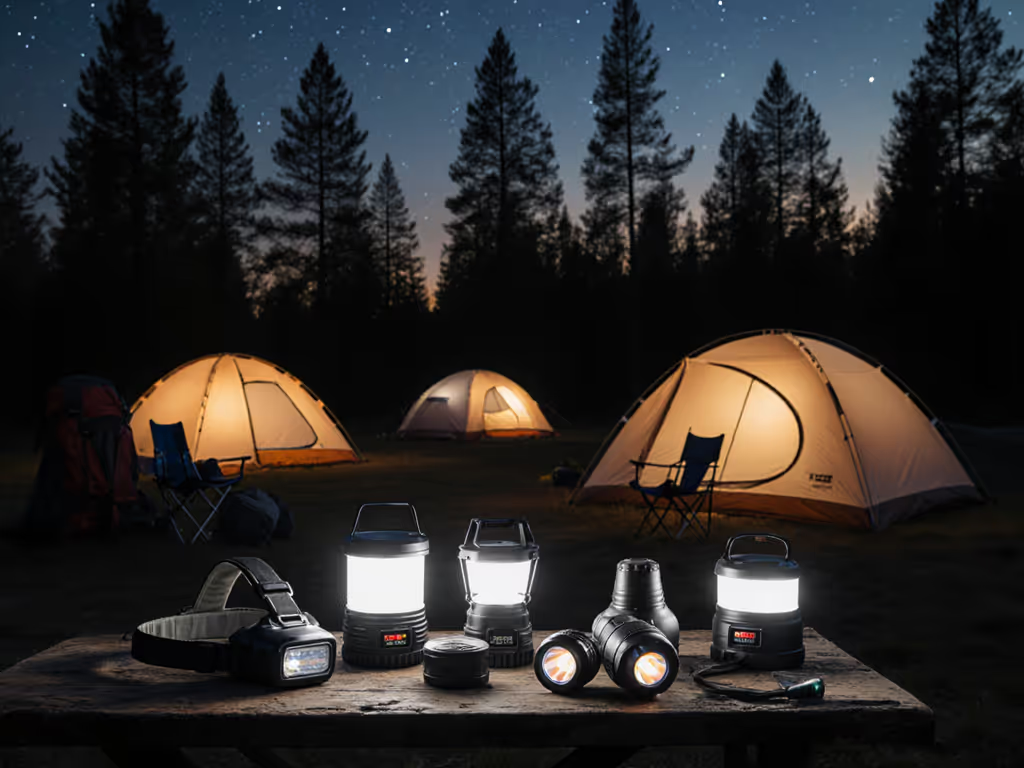
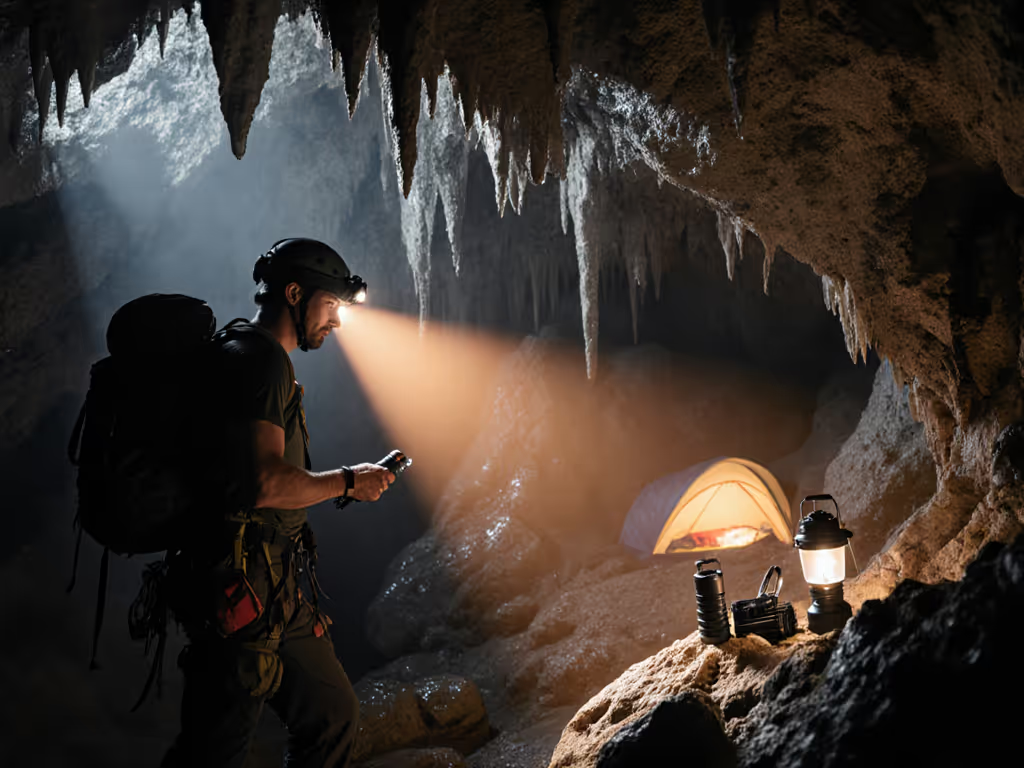
Forget stacking gadgets. A resilient solo lighting system layers three intentional components that back each other up. Here's how to structure it:
1. The Primary Light: Headlamp with Purpose
Your headlamp should meet three criteria:
- Warm mode standard: Not an afterthought. Look for dedicated warm-white LEDs (not CCT-shifted cool white). The Petzl Scara 600, for example, uses a 3000K warm LED array alongside its cool white (no mode cycling needed).
- Physical switch redundancy: A primary button plus secondary lockout toggle. The Black Diamond Moji+ uses a rotating collar that doubles as mode selector and lock, a brilliant use of mechanical friction.
- Battery transparency: Clear charge indicators. Avoid systems that only blink red at critical levels. The Fenix HM65R shows remaining runtime digitally via its side button (no guesswork).
For ultralight expedition lighting, prioritize headlamps accepting 18650 cells over proprietary packs. If weight is your top priority, compare ultralight backpacking lights vs heavy tent options. Standardized cells simplify spares and cold-weather swaps. I keep one lithium-ion 18650 wrapped in foil (for insulation) and one alkaline CR123A as emergency backup (chemically distinct so temperature doesn't kill both).
2. The Area Light: Tent and Table Presence
Camp tent lighting should create a contained bubble (bright enough for tasks but shielded from the wider landscape). Avoid canister-style lanterns that blast 360°. Instead, look for:
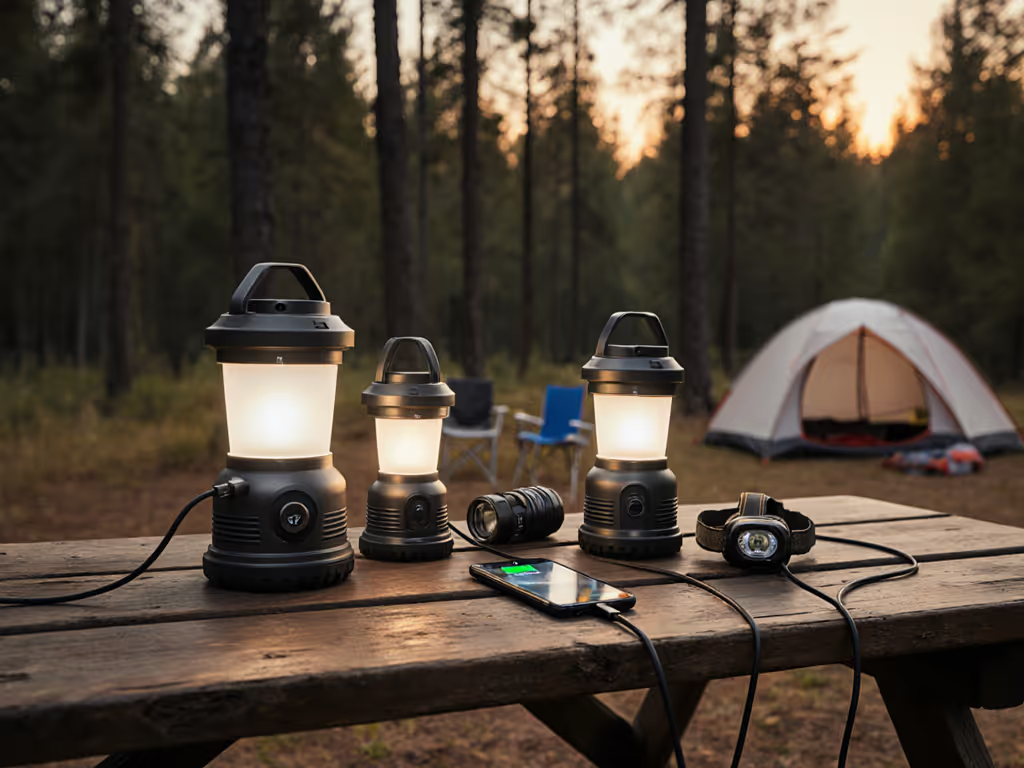
- Directional panels: BioLite's AlpenGlow series uses segmented LED arrays; you can illuminate only your tent vestibule while keeping the sleeping area dark.
- Matte silicone diffusers: Glossy plastics create painful hotspots. LuminAID's PackLite uses textured PVC that scatters light evenly (no visible diodes).
- Magnetic mounting: For tent pole attachment without clips. The Goal Zero Lighthouse Micro Flash has a steel base plate that sticks securely to trekking poles.
When testing minimalist camp lighting, I found that 150-200 lumens max is sufficient. At 100 lumens with 2700K warmth, the BioLite Luci Original creates enough spill for cooking while maintaining night vision. More crucially, its solar panel charges via any light source (dawn through dusk), making it a genuine set-and-forget piece.
3. The Redundant Power Source: Beyond the Spare Battery
Backpacking lighting redundancy fails when backups share failure modes. A spare USB power bank is useless if your only charging method is solar and clouds roll in. Craft true resilience with:
- Diverse charging inputs: Prefer lights with USB-C and solar, like the newer BioLite models. My AlpenGlow Mini charges via car USB while parked, then transitions to solar trailside.
- Cold-weather contingency: Lithium primaries (like Energizer L91s) maintain capacity below freezing where lithium-ion plummets. I keep two in a waterproof bag taped inside my sleeping pad.
- Mechanical fallbacks: The Black Diamond Moji series accepts both AAA and rechargeable BD1500 cells, so if your USB cable fails, alkalines still work.
This layered approach delivers one-person lighting efficiency without excess. My current kit weighs 9 ounces total: a warm-LED headlamp (3.2 oz), collapsible lantern (4.4 oz), and two lithium primaries (1.4 oz). Less than half what I carried five years ago, yet dramatically more reliable.
The Cold Reality Check
Trail-tested truth: manufacturer runtimes lie. "100 hours" usually means 5 lumens, barely detectable. For real-world solo backpacker lighting, verify:
- Actual runtime at 20 lumens (functional camp light level)
- Temperature derating curves (cold cuts Li-ion capacity by 25-40%)
- Real CRI measurements (not "CRI>80" marketing claims)
I measure this by running side-by-side tests in my temperature-controlled chamber. At 32°F, a typical USB lantern claiming "50-hour runtime" lasts 32 hours at useful brightness. For sub-freezing trips, see winter backpacking lighting systems tested for cold-proof setups. That's why my fail-safe system always budgets 30% less runtime than specs suggest.
Closing the Loop
On my last solo trip through the Sawtooths, I watched a neighbor's camp glow with harsh 5000K glare while mine stayed intimate with warm 2700K spill. His light reached three campsites over; mine hugged the tent footprint. That's the difference between lighting that dominates and lighting that belongs.
True freedom in the backcountry comes not from shedding weight indiscriminately, but from carrying only what serves the moment. Your lighting system should dissolve into the experience, present when needed, invisible when not. That brass lantern from my childhood didn't just light the table; it shaped how we gathered there.
For deeper exploration, study the Dark Sky Association's lighting guidelines for campers. Or analyze photometric data from Outdoor Gear Lab's 2025 lantern tests, they measure real beam angles and tint accuracy. Most importantly, test your system at home first: simulate a dead battery scenario before you're alone in the dark. Because the best solo lighting isn't about never failing (it is about failing gracefully).
Related Articles